Colour · How matching works
Hair Extension Colour Matching: Depth, Undertone and Reflect
Matching a shade is three judgements rather than one: depth is how dark the hair is, undertone is which way the pigment leans, and reflect is how brightly it leans. The eye forgives a depth error and does not forgive an undertone error. Because your own hair is several colours at once — root, mid-lengths, ends, nape and crown — we match against the hair the extension will lie against, not the root. We do not promise an exact match from a photograph: a colour ring compared in daylight, or a cut sample, settles it.
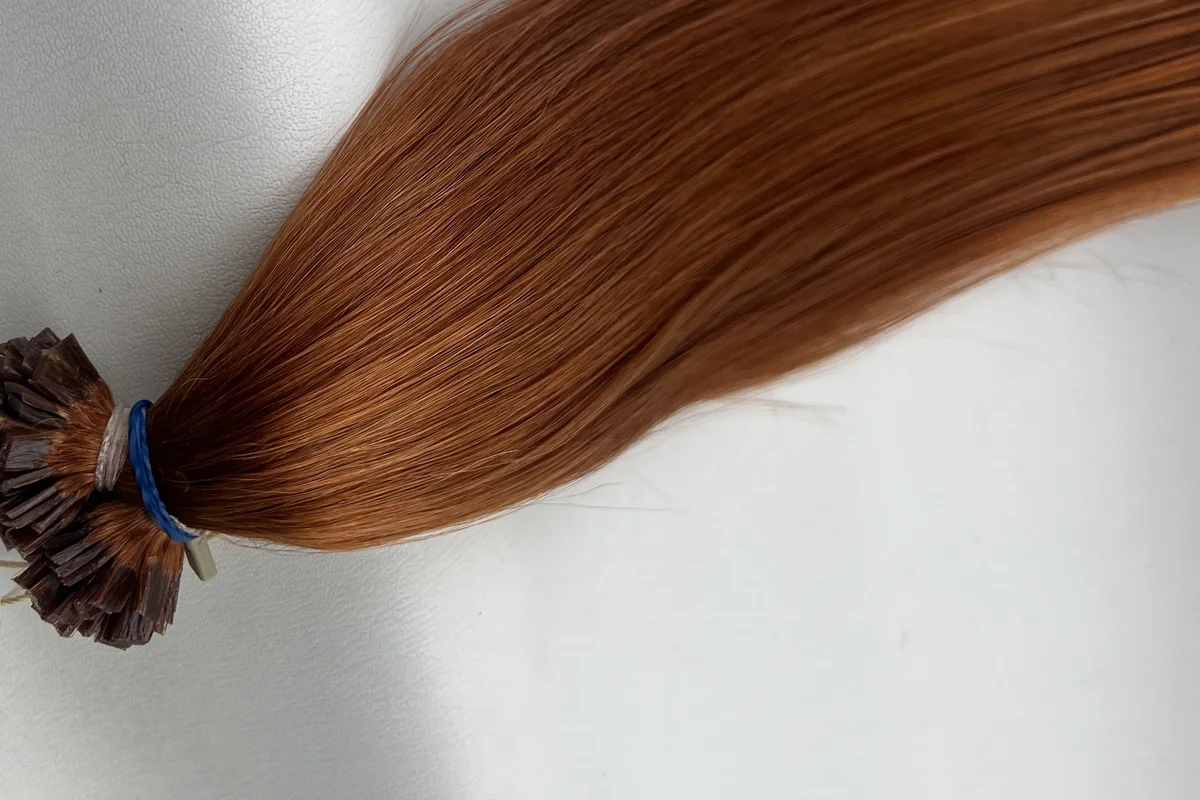
Colour causes more disappointment than any other part of this work, and almost none of it comes from the wrong shade being sent. Usually the shade is right as a description and wrong as an object.
This page is not about which colour would suit you. It is about how a match is arrived at, and what nobody can honestly promise before the hair is in front of them.
One shade name, three separate judgements
A shade name carries three separate judgements, and a failed match usually means only one was checked. Depth is where the hair sits between black and the palest blonde. Undertone is which way the pigment leans there. Reflect is how brightly it leans.
They do not fail equally. A depth error disappears into the variation your hair already carries. An undertone error does not: warm hair inside cool hair is legible across a room even when the depth is exact. So undertone is settled first, depth afterwards.
Your hair is not one colour
Even untouched hair is not a single shade. The root is newest and most sheltered, the ends carry the longest history of sun, heat and washing, the mid-lengths sit between. The nape lives in shade; the crown and the hair framing the face take the most light.
A shade chosen against one point is right there and wrong everywhere else — a dark band through the top layers if it came from the nape, a pale patch underneath if it came from the crown. What the eye registers is not colour. It is a seam.
Match to the mid-lengths, not the root
An extension does not live at the root. The attachment sits below it and the strand travels alongside your mid-lengths and ends for its whole life, so that is where the ring goes in.
Match precisely to root colour and it looks right on the day, then becomes a fault. Your root is darker than your ends, so the strand stays darker than everything around it as it descends, reading as a shadow line, and growth carries it further into your lightest hair. A good match holds a small, deliberate gap.
Why two or three shades read more naturally than one
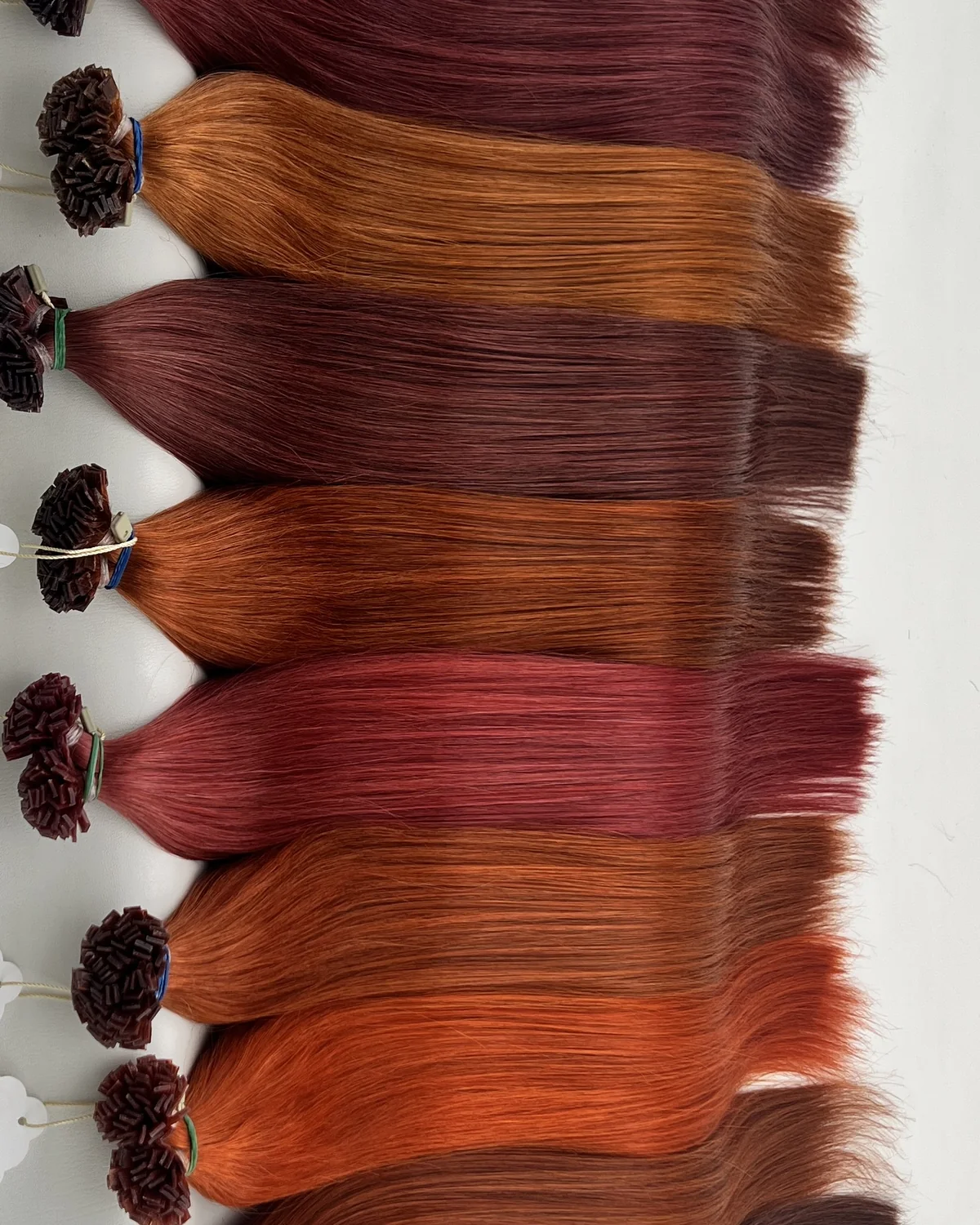
A single flat shade is the easiest thing to order and the easiest to spot. Real hair contains fibres that differ slightly at every point on the head; a uniform shade removes that scatter and behaves like a surface rather than hair.
Set a shade a touch lighter and one a touch deeper beside the dominant one and the eye stops looking for a single colour: it reads a range and accepts it as natural. A small error then has somewhere to hide. Weighting those components is production work, set out on blending and mixing shades.
Coloured, bleached and henna-treated hair change what is achievable
Coloured hair is a moving target. Warm reflect and cool deposit do not fade at the same rate, so a match exact a week after a colour service can drift within several washes. The question is not what colour the hair is, but how it got there.
On lightened hair the base underneath decides, not the tone on top. Henna must be declared however long ago, and so must box colour and colour-depositing products: they stay in the hair and limit what can be done over them. Found out late, the cost is the appointment.
Why a photograph cannot carry absolute colour
A phone recalculates its white balance for every frame. The wall behind you, the top you are wearing, the window to one side: each shifts the point the camera treats as white, and the image is rebalanced around it. The screen then adds its own profile.
So the judgement splits. Depth can usually be estimated from a good photograph; undertone, which decides whether the work looks right, usually cannot. We do not promise an exact match from a photograph. One thing helps: photograph a colour-ring strand laid into your own hair, so the camera applies the same error to both.
The reliable methods are physical: ring and sample
A colour ring is not held in the air beside the head. The strand is laid against the mid-lengths and worked in among the fibres, so both take the same light at the same angle. Two shades can look identical side by side and separate when interleaved.
It is done in indirect daylight, whose broad spectrum gives everything in the hair something to reflect. Most lamps are thin in parts of it, so two strands can agree in a salon and separate on the doorstep. Direct sun flattens undertone instead.
The second method is a small section cut where the extension will sit, root end marked so the direction is known, which removes the screen entirely. Hair should be dry and combed for either. In the room you take the ring outside, as we do at our workshop in Fethiye.
The same error is not equally visible in every system
Tolerance depends on how the hair is attached. A sewn weft, a tape panel or a clip-in set puts a continuous width of hair in one place, so an undertone error arrives as a solid block with an edge — and an edge is what the eye finds first.
In Micro or Nanofilament work the same weight is divided across many small units, each surrounded by your own fibres, so an identical error disperses and reads as variation the hair already had. A difficult match therefore travels better dispersed than in a wide panel; the mechanics are on the systems comparison.
A match is a moment, not a permanent state
The match made on the day is not a state the hair stays in. Your own colour is refreshed; the extension hair is refreshed by nobody. Sun, salt, chlorine, heat and shampoo act on both but never equally, so a match rarely breaks at once. It opens gradually.
The remedy is coordination: whoever refreshes your colour should know what is already on your head, which is easy to arrange before the tint is mixed. A routine maintenance appointment is also a colour check.
The honest limits of colouring extension hair after manufacture
Extension hair is not living. It has no recovery and no new growth to dilute what has been done to it, so every process is still in it and the next one sits on that history.
Going darker is more predictable than going lighter; lightening is not usually advised, because how much pigment remains cannot be judged from outside and the result cannot be undone. Product must be kept off the attachment — a keratin bond has its own chemistry. Test a spare strand from the same batch first, and prefer to specify the colour at manufacture.
Frequently asked
Common questions
Will you promise an exact match if I send photographs?
Not exactly, and we will not say otherwise. From a good photograph we can usually judge depth. Undertone, which decides whether the finished work looks right, usually cannot be read from an image at all, because the camera fixes its own white point and the screen applies its own profile. We can get close, and we will say that it is close rather than exact. A firm decision needs a ring in daylight, or a cut sample.
Why does the match look right in the salon and wrong outside?
Because most artificial light is thin in parts of the spectrum, so a difference lying there has nothing to reflect and does not appear. Daylight carries a broad, even spectrum, which is why the same difference shows itself on the doorstep. That is a property of the lamp rather than a fault in the hair, which is why we compare outdoors, on dry combed hair, from several angles.
Should I have my own colour done before or after the fitting?
Before. Matching to a colour that is about to change means matching to a target in motion, and extension hair cannot simply be corrected afterwards to catch up. Book your own colour service first, let it settle, then match, then fit. If your colour is refreshed on a cycle, say so at the consultation: the shade should sit sensibly across the whole cycle, not only the week it was applied.
Do I have to mention henna from years ago?
Yes, however long ago it was, and the same applies to box colour and colour-depositing products. Henna stays in the hair for a long time and limits what can be done over it. Declared early, it changes the plan usefully: the target shade may move, the blend may be weighted differently, or your own hair may need a preparation step first. Discovered afterwards, it costs the appointment.
Send your colour history and a daylight photograph of dry, combed hair, and we will settle the target shade and the verification step with you.
Method, colour, length and grams are settled by consultation before anything is quoted.