From the factory floor
Hair Extensions in Fethiye: What Is Here, and How to Plan a Visit
We manufacture hair extensions in Fethiye, Muğla, which is the only local fact on this page that changes anything for you: questions about how the goods were made have an answer here, from the people who made them, rather than dying at a counter. That does not improve an application, because whoever fits the hair still decides most of the outcome, and it does not remove the constraint every visitor carries — you will maintain the set somewhere else, with someone else. This page is therefore built around planning: what to establish before you travel, why a colour match cannot be finished on a screen, which methods a short trip quietly rules out, and when the honest answer is not now. Our current Fethiye service prices are published in full, including what a package covers and what colour work costs separately. What is not published is a schedule or a promise about what will be possible on a given day, because those are things to confirm directly rather than to read.
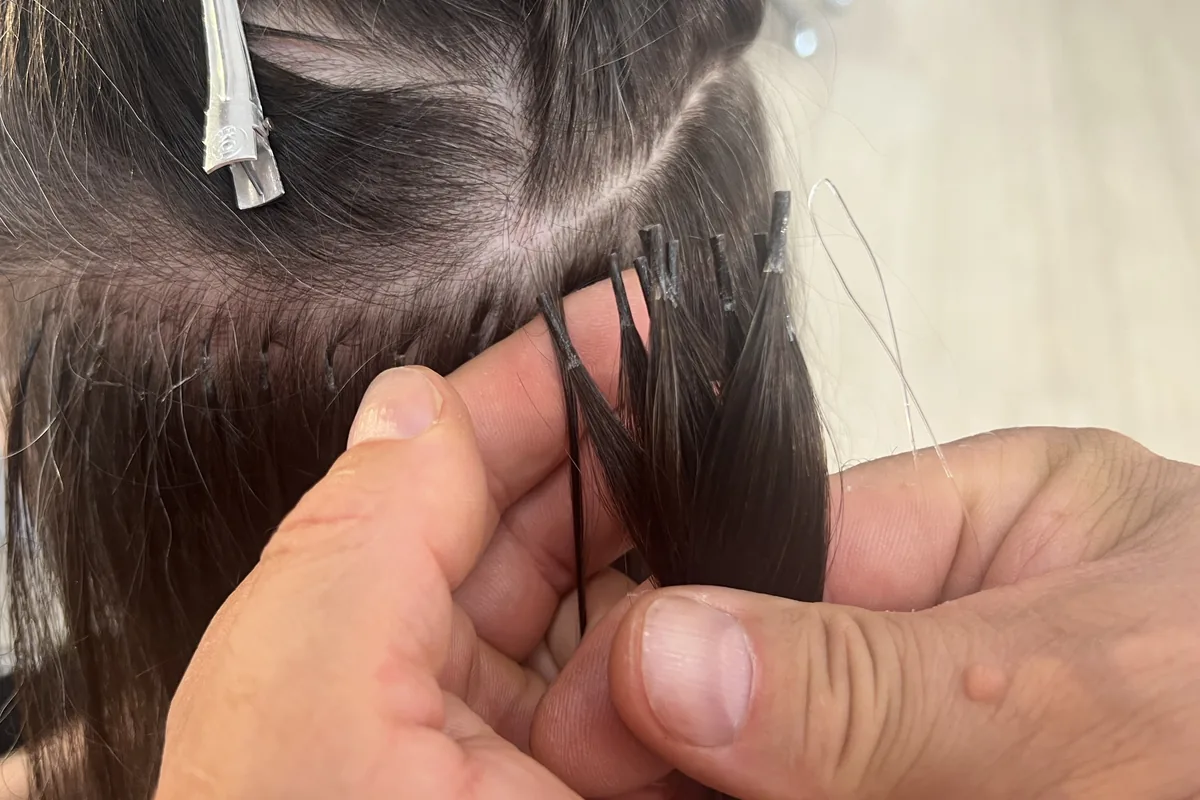
Real work in Fethiye
Production, application and colour in the workshop
The images below are real product and application photographs from the SACH & VOGUE HAIR workshop in Fethiye. Exterior and consented client outcome photography is not yet published.
Acquisition backlog: workshop exterior, consultation desk overview, consented before/after.
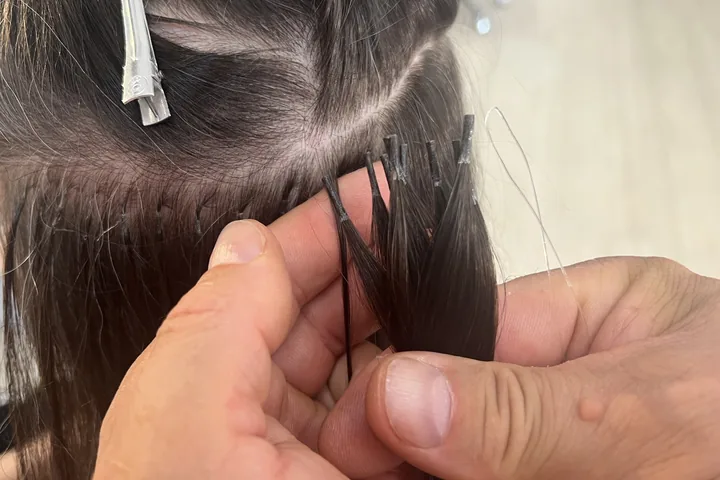
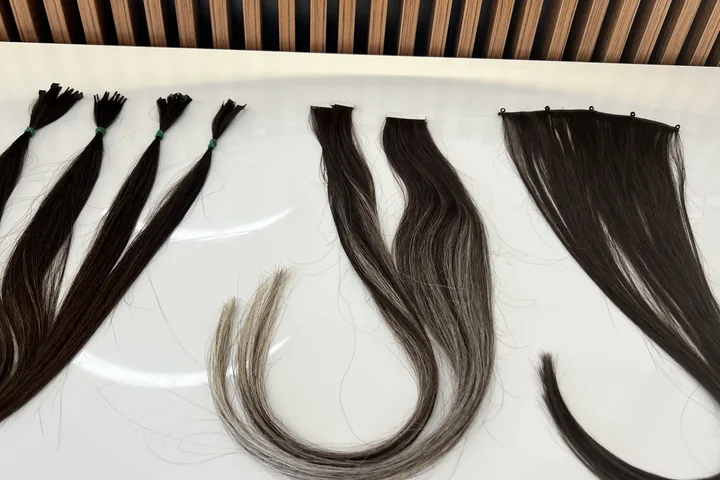
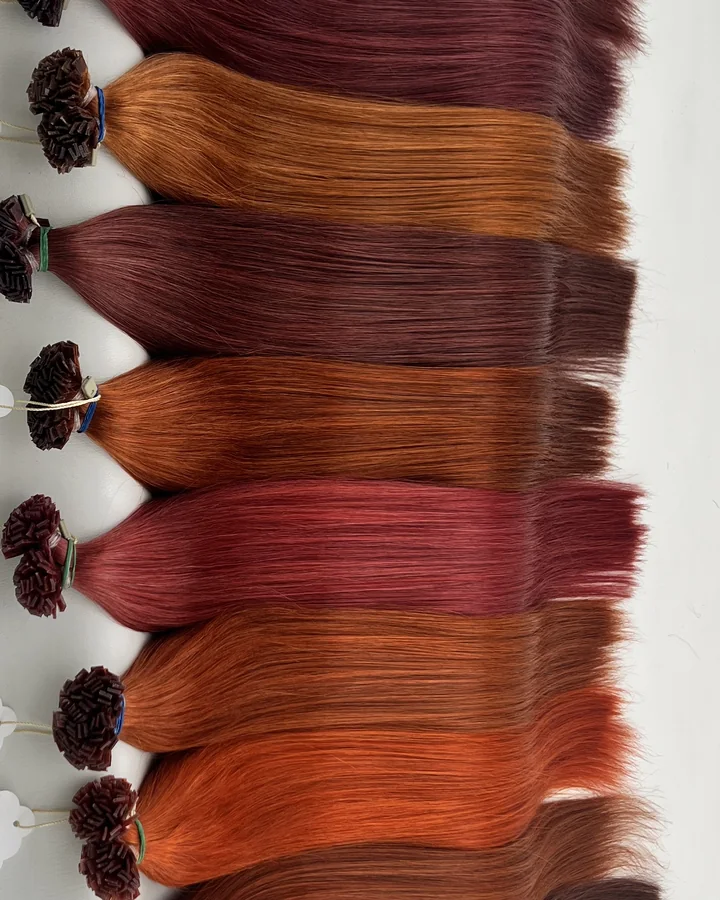
Almost nothing has been written in English about having hair extensions fitted in this district, which is a gap rather than an opportunity, and the only way to fill it usefully is with things that are true of this place. So there are no photographs of a coastline here and no claim to be anybody's first choice. There is one structural fact — the hair is made here — and then the practical problem that fact does not solve.
That problem is time. A visitor has a fixed number of days, a return flight, and a technician at home who will inherit whatever is fitted. Those three constraints decide more than any product argument, and the ordinary consultation never raises them.
Being where the hair is made changes which questions have an answer
The ordinary limit of an extension consultation anywhere is that the person in front of you did not make the goods. Ask what compound forms that bond and whether it matches the remover you will be handed, or how many drawing passes produced that bundle. A good salon puts the question to their supplier and returns with what they are told. Often it stops there, and a word arrives instead of an answer.
We manufacture in Fethiye, Muğla. That is the whole of the local difference, and it is worth stating narrowly rather than grandly: production questions are answerable here without a chain of intermediaries, because the people answering them run the process. What sits behind that, and how a buyer should test any such claim, is on the manufacturer page.
What proximity to production does not do is improve an application. Whoever fits the hair decides most of what you will live with — how sections are taken, where joints sit relative to the parting and the hairline, how much of your own hair goes into each point, and whether anybody says no when no is the right answer. It also makes us the wrong party to ask whether our own products suit you. What we can do is say where they are the wrong choice and name what belongs in their place.
The questions below are not tests to catch anybody out; they decide whether the set behaves in six months the way it behaves on the day. The same checks work on any supplier in any country, and we set them out in that general form on the page about manufacturing in Turkey. What is local is only that the answers do not have to travel.
We should meet our own standard, so here is the one measurement we publish. Ten Nanofilament strands weighed together came to approximately 3 g and ten Micro strands to approximately 6 g, which divides to approximately 0.3 g and approximately 0.6 g per strand. That is a batch reference comparison: the per-strand figures are derived by division rather than weighed individually, and it is not a laboratory test or a calibrated scientific measurement. The consequence for you is not technical — the same total weight in lighter units means roughly twice the joints, and roughly twice the chair time at every appointment for as long as you own the set.
- What forms the bond, and is the remover I will be given the one specified for it?
- Drawn once or repeatedly, and how many passes does your Double Drawn standard involve?
- What does one attachment unit weigh, and was that weighed individually or derived from a batch?
- Is this shade a single process or a blend, and if a blend, which codes in what proportion?
- Could this specification be supplied again in a year, from a different raw lot?
- Which steps happen in this building, and which are sent out?
- Where does your knowledge of this hair begin, and what are you repeating from a supplier?
What is available here, described as capability rather than as a timetable
This page publishes no opening hours, no appointment availability and no statement about what can be done on a particular day, and the omission is deliberate rather than evasive. Anything of that kind would be accurate for a period and then quietly wrong, read by someone who booked a flight around it. Confirm availability with us directly before you travel.
What can be described honestly is capability, which is stable. We manufacture hair extensions: sorting, drawing to a stated standard, colour work, tip formation and assembly. We hold professional application knowledge, so the conversation about method, grams, placement and condition can be had properly rather than as a product pitch. And because the hair is produced here rather than bought finished, a specification that does not yet exist — a length between two catalogue sizes, a shade blended from two codes — has a real answer rather than an automatic no.
The practical form of that is a match assessed against physical hair in daylight rather than against a screen, which is the one thing a remote enquiry cannot reproduce. What the underlying terms mean mechanically — Remy, drawing standard, grams against strand count, why length behaves as it does — is on the hair extensions page.
Equally, what is not here. This is not a laboratory, and we publish no test results beyond the batch weighing above. It is not a clinic: we do not diagnose scalp conditions or hair loss, and where an assessment points that way the answer is a qualified professional.
Planning a fitting around a trip: what to settle before you are in the country
The common planning error is not choosing the wrong method. It is arriving with the decision still open, spending the first days deciding, and then finding that what was decided cannot be produced inside the days remaining. Most of what goes wrong with a visitor fitting is a scheduling failure in a technical costume.
Four things decide whether one visit is realistic, and none of them is the method's name. Whether the specification you want exists or has to be made. Whether your own hair needs a colour service first. Whether the shade is a single code or a blend. And whether the trip has room left for the check that should follow a fitting a short while afterwards. Where one of those does not fall the easy way, two appointments is the correct answer, and being told so is a good sign rather than an obstruction.
Sequence is what people get backwards, and it is not recoverable afterwards. Colour first, match second, fit third. Booking your own colour appointment for after the fitting means matching to a target about to move, and extension hair does not take subsequent colour the way living hair does — it has no living structure to recover, and every process it has already been through is still in it.
Book early in the trip rather than late, because a fitting on the final day removes every option you might need: the follow-up check, an adjustment where a section sits too tight, a small addition where density falls short. Those are ordinary events rather than failures, and they cost nothing if there are days left to use.
Time on the day tracks the number of attachment points rather than the method's name, so a strand system and a set of tape panels at the same total weight are not comparable appointments. And listen for what a competent assessment sometimes ends in — fewer grams than you asked for, a shorter length, or a recommendation to wait.
- Target length in centimetres, measured from the top of the attachment rather than the scalp
- Roughly the grams you are aiming at, and whether you have worn that weight before
- The exact dates you are here, and which of those days are genuinely free
- Where you live, and whether a technician there will maintain the set
- Whether you intend to swim daily during the stay
A remote colour match gets close, and what you send decides how close
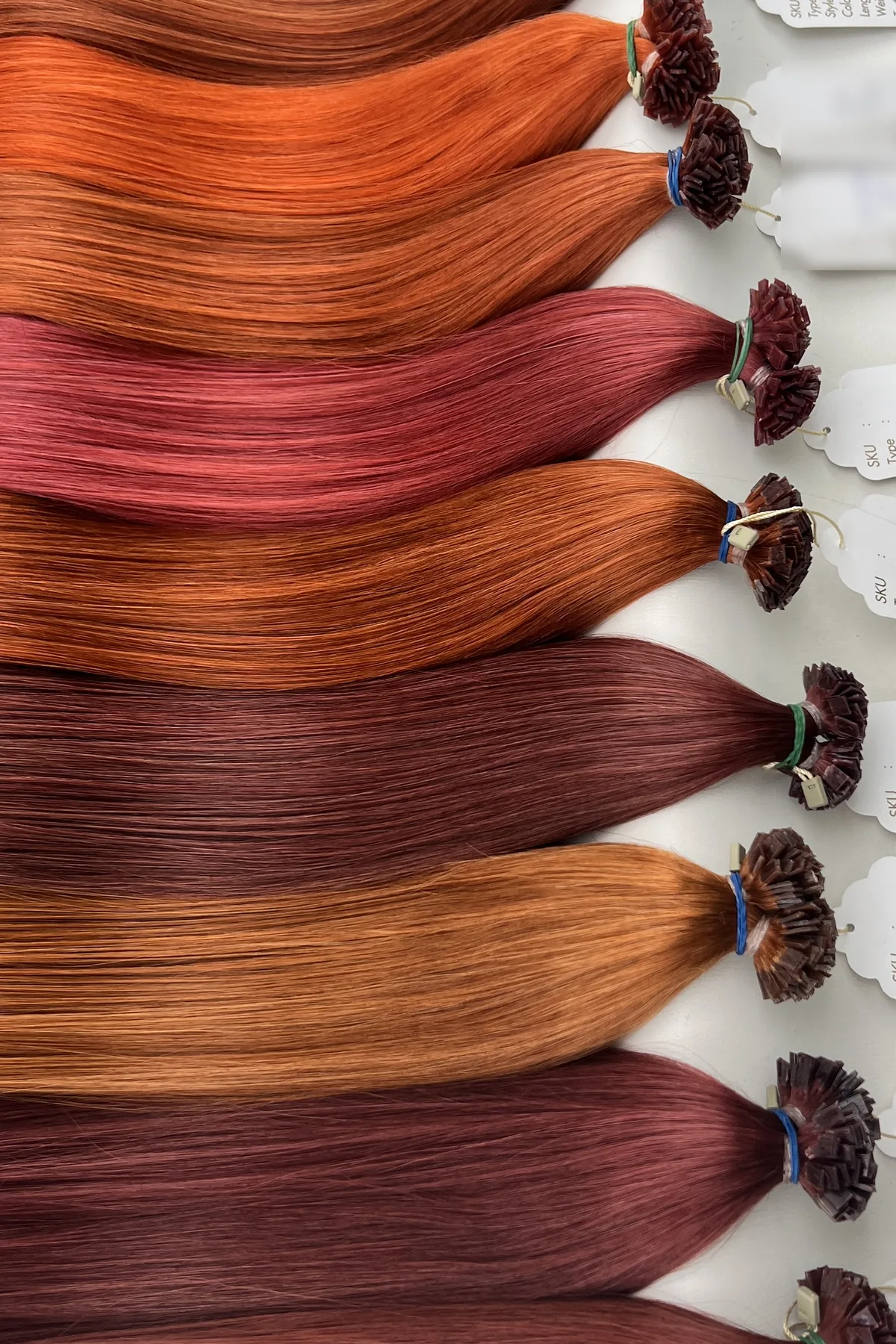
A photograph of hair records the camera's white balance and your screen's colour profile at least as faithfully as it records the hair. Depth can usually be estimated from an image; undertone frequently cannot, and undertone is where the eye is least forgiving — warmth against an ash base reads instantly. We will get close from photographs, often close enough to work from, and will say it is close rather than exact before anything is committed to.
The part almost nobody sends, and the part that changes the answer most, is colour history rather than colour. Two heads can photograph as the same brown and behave entirely differently, because one has never been processed and the other is three years of home colour over a lightened base. That history decides what the extension hair should be and how the two will diverge as they fade, and it is invisible in an image. Say plainly if there is henna or a home colourant anywhere in it, even years back, because it constrains what a colourist can do to your own hair afterwards.
The reliable procedure is physical and slow. A cut sample of your own hair from the mid-lengths takes the screen out of the process entirely, and it is the most useful single thing a visitor can post ahead or carry. Tape one end and mark it as the root, so direction is not guessed at. If your hair carries several tones, which is most people, no single code will match it and the honest target is a blend — which cannot be assessed from an image at all.
- Your colour history in writing: every process in the last two years, dates, salon or home
- Whether the hair has ever been lightened, and how far, even if coloured over since
- Your colourist's formula or record, if you have one
- Any henna or home box colour in the history, however long ago
- A cut sample from the mid-lengths, root end marked, if you can send or bring one
- Photographs in indirect daylight, dry and unstyled, framed separately for root, mid-lengths and ends
The method that suits your hair can still be the wrong method for your trip
Every semi-permanent system needs periodic reapplication and eventual removal. For someone living where the set is fitted, that is a diary entry. For a visitor it is a different question, because the person fitting the hair will not be the person maintaining it, and a system nobody near your home will service is the wrong system however well it suits you.
This genuinely rules options out, and we would rather say so than sell into it. A bonded system needs a technician who holds the release agent specified for that compound and is willing to work on a joint they did not form — some decline hair they did not supply, as policy rather than as a slight. A taped set consumes a fresh strip at every reinstallation. Each of those is a call you can make before you fly and cannot make usefully afterwards.
Applied to our own range, honestly. Our flagship is Nanofilament, strand-based, made in 0.3 g and 0.6 g per-strand options — not a nano-ring system, and sharing no mechanism with ring products despite the prefix. Micro is our individual bonded strand system, bonded with Italian keratin, and Butterfly Tape-In sits in the tape-in family. A small-unit strand system distributes weight across many joints, which is the argument for it; the price is that every appointment for the life of the set is longer. A visitor who cannot fund or reach that maintenance at home should not be fitted with one — not as a caveat on a sale, but as a reason to choose something else.
Which family is mechanically right for your density, your layering and your routine is answered system by system on the hair extension methods page, including where each should be declined. Then run the test that costs one message: send the system name, release agent, per-unit weight and length to whoever will maintain the set at home, and ask whether they will take it on. A no is far cheaper now than in four months.
Condition assessment, and the cases where the honest answer is not now
A visitor carries a pressure a local client does not. You have travelled, the days are counted, and a good deal has been arranged around this. That pressure is precisely why not now is difficult to say and important to hear, and it is worth deciding before you arrive that you are willing to hear it.
What is actually assessed is narrower than people expect, and almost none of it shows in a photograph: the length of the shortest layer where joints would sit, because concealment binds long before grip does; density where the weight would be carried; how the hair behaves wet; the state of the hairline, where previous traction shows first; the scalp; and the history you report, which only you can supply.
Some findings mean not now rather than not ever, and most of them resolve. Active shedding of unknown cause should be explained before anything is attached, by a qualified professional rather than by us. An inflamed, broken or recently treated scalp is not a surface to load. A hairline already showing traction damage should not carry more of the same. Hair that stretches when wet and does not spring back has lost the structure that carries load.
Between yes and no there is a wide middle worth asking for by name: fewer grams than the original brief, a shorter length — which reduces both the weight and the leverage on each joint — a different family, or a partial set. Nothing here is medical advice or a substitute for examination by a qualified professional. What extensions apply is sustained mechanical load at points you cannot see without help, and where there is doubt about whether your hair or scalp should carry it, the doubt is the finding.
What happens after you fly home, and the document that decides it
A set fitted while travelling is owned somewhere else. Reapplication is periodic rather than optional, and its timing is governed by your own growth rate rather than by an interval anybody can publish: as a joint travels away from the scalp it becomes visible, gains leverage against the hair holding it, and begins collecting shed hair. That is what triggers a move-up, not the condition of the extension hair.
Removal is the appointment nobody plans for and the one where hair is most often lost. Every family has one correct procedure, and in each the joint is opened before anything is pulled. A technician improvising on an unfamiliar joint, without the specified release agent, under time pressure, is the most expensive scenario in this trade and entirely preventable at the point of fitting. Which is why the written handover matters more than anything else you carry home: it is the instruction set for a person who was not there.
The routine itself is short, and every part of it keeps friction, moisture and weight away from the joints: washing upright rather than head-forward, keeping conditioner and oils to the mid-lengths and ends, drying the attachment zone properly rather than leaving it damp, brushing upwards from the ends, and rinsing immediately after salt water or chlorine.
- The system name and product name, written out rather than described
- The release agent specified for that exact joint, named
- Per-unit weight, total grams supplied and the number of units fitted
- Length in centimetres, and the point the measurement was taken from
- The shade code or codes with their catalogue, and the proportion if it is a blend
- The date fitted, and a photograph of the attachment zone taken on day one
Fethiye, Ölüdeniz and Muğla, stated plainly
Fethiye is a district of Muğla province on the south-west coast of Türkiye, and Ölüdeniz is a coastal locality within the same district — close enough that visitors treat the two names as interchangeable, which they are not. Our address is Taşyaka Mah., Ölüdeniz Caddesi (TSK), No: 45/1, Fethiye / Muğla, 48300. Read it carefully: Ölüdeniz Caddesi is a road in Fethiye rather than an address in Ölüdeniz.
Two things follow from that geography and very little else does. The first is the fixed-duration visit, the constraint this whole page is organised around: most people asking these questions here are working with a defined number of days rather than an open diary.
The second is water and sun, which are mechanical rather than atmospheric. Salt water and chlorine at the attachment zone, repeatedly, followed by drying in bulk, is the classic matting sequence, and a set fitted at the start of a swimming holiday takes its hardest fortnight first rather than last. Sun acts hardest on lifted shades, which have less pigment left to lose. Neither is a reason not to proceed. Both are reasons to say at the consultation how you intend to spend the days after the fitting.
Where a published price stops and a specification begins
Service work here has a published figure: application, removal, renewal and colour are listed on the Fethiye price page, and the packages there cover hair and application together. What still cannot be quoted from an email is the hair itself, because hair extensions names a category rather than a specification, and the variables underneath move independently: weight in grams, length, drawing standard, natural base or processed colour, one code or a blend, and how many units the system divides into. How each of those moves a total is set out on how extension pricing is built up.
So the labour side is knowable in advance and the hair side follows a specification. Bring the items below; without them, a figure for the hair is a figure for a different product.
A consultation should also produce something for you, not only for whoever is quoting. Before agreeing to anything you should be able to state back what you are having done in units rather than adjectives: this many grams, at this length in centimetres, in this system, at this per-unit weight, in this shade code or blend, with this release agent. Where one of those is still a word rather than a value, the specification is unfinished — and a figure set against an unfinished specification only ever moves in one direction.
- Current colour and the history behind it, plus a physical sample if you have one
- Whether a single shade code will do, or a blend is required
- The condition of your own hair, honestly, including anything you are unsure about
- Your actual routine: heat, swimming, oils, wash frequency, how you sleep
- Which system you are considering, and whether it can be serviced where you live
- Whether this is a one-off or something you intend to maintain for years
What cannot be promised before you arrive
We cannot promise an exact colour match from photographs. We can get close, we will say how close before anything is committed to, and the reliable methods are physical ones: a sample of your hair, or shades held against it in daylight.
We cannot promise from a web page that a particular specification is available in the shade and length you want at the moment you read this, nor state here what any given visit can include. Confirm both with us directly, close to the date.
We cannot tell you how many grams your own hair can carry. To our knowledge nobody in this trade has published a controlled study of traction or retention on real scalps, so a hard maximum quoted in grams is an assertion the field has not established. It is judged on the head, in person, and it can be judged wrongly.
We cannot promise that one visit will be enough, and we cannot promise that the answer will be yes: an assessment that never declines anyone is not an assessment. Nor can we tell you that here is the right place to have this done, and any page claiming otherwise about its own town should be read as advertising. Ask what was measured, ask where the supplier's knowledge stops, ask who will service the set afterwards, and prefer the party who names a limit over the one with an answer for everything.
Frequently asked
Common questions
Can I have this done in one visit?
Sometimes, and four things decide it rather than the method: whether the specification exists or has to be made, whether your own hair needs a colour service first, whether the shade is one code or a blend, and whether the trip leaves room for a follow-up check. Where one of those does not fall the easy way, two appointments is the answer, and hearing that early is worth more than being accommodated late.
What should I send before I arrive?
Your colour history in writing: every process in the last two years, approximate dates, salon or home, and whether the hair has ever been lightened. Your colourist's formula if you have one. Photographs in indirect daylight, dry and unstyled, framed separately for root, mid-lengths and ends. Your target length in centimetres, roughly the grams you want, and your dates. And if you can, a cut sample from the mid-lengths with the root end marked — worth more than every photograph combined.
Do you fit hair as well as make it?
We manufacture hair extensions in Fethiye and hold professional application knowledge, which is why the conversation about method, grams, placement and condition can be had properly here rather than as a product pitch. What application work is available at any particular time is not something this page can state accurately, so ask us directly before arranging anything around it.
Where exactly are you?
Taşyaka Mah., Ölüdeniz Caddesi (TSK), No: 45/1, Fethiye / Muğla, 48300, Türkiye. Read the street name carefully: Ölüdeniz Caddesi is a road in Fethiye, not an address in Ölüdeniz itself, and visitors confuse the two regularly. Confirm the practical arrangements for a visit with us rather than relying on a map pin.
Can you match my colour from photographs before I travel?
We can get close, often close enough to work from, and will say it is close rather than exact before anything is ordered. A photograph carries relationships inside the frame reliably — this section warmer than that, the ends lighter than the mid-lengths — but not absolute colour, because the camera sets white balance and your screen applies its own profile. Undertone is what it loses first.
Which method should I choose if I am not coming back?
Choose by what is serviceable where you live rather than by what suits your hair in the abstract. Bonded systems need a technician holding the release agent specified for that compound and willing to work on a joint they did not form. Taped sets consume a fresh strip at every reinstallation. Send the system name, release agent, per-unit weight and length to your technician at home before you travel, and let the reply shape the list.
Can I buy hair here and have it fitted at home?
In principle yes, and the obstacle is rarely the hair. Some technicians decline to fit extensions they did not supply, as a standing policy rather than a slight, so establish that before buying anything. If they will, the shade codes and their catalogue, the per-unit weight, the length, the drawing standard and the specified release agent all need to travel with the goods.
What if my hair is not in good enough condition?
Then the answer is not now rather than not ever, and it is worth deciding before you travel that you are prepared to hear it. Active shedding of unknown cause, an inflamed or broken scalp, a hairline showing traction damage, or hair that stretches when wet without recovering are all reasons to stop. Most resolve. There is also a middle ground worth asking for: fewer grams, a shorter length, or a partial set.
How far in advance should I get in touch?
Early enough that the colour conversation happens before flights are booked around a date, because that exchange has the longest tail. Sending your colour history and photographs ahead settles part of the matching question before you arrive, and it determines whether anything has to be made rather than picked. We publish no lead times here, because they depend on the specification.
Will I need to come back here for maintenance?
No, and you should assume you will not. Reapplication is periodic and governed by your own growth rate rather than by a published interval, so it will happen wherever you live, with whoever you find there. That is why the written handover matters: system name, release agent, per-unit weight, total grams, length, shade codes with their catalogue, and the date fitted. Identify that technician before you fly.
Do I need to speak Turkish?
These pages are published in English and you are welcome to write to us in English. What that looks like in person on a given day is worth asking when you get in touch — a more reliable answer than a website could give in advance. Whatever the language, insist on the specification in writing: units rather than adjectives.
Related pages
Continue reading
Tell us your dates, your target length in centimetres, your colour history and where the set will be maintained, and we will tell you what is realistic in the time you have, what would need to be made, and where a different choice would serve you better.
Method, colour, length and grams are settled by consultation before anything is quoted.