From the factory floor
Hair Extension Maintenance: What the Wearer Inherits, and How to Do It
Maintenance is a specification decision rather than an afterthought: the routine a person can realistically keep should shape the system, the unit size and the placement. Day to day it reduces to keeping friction, moisture and product away from the attachment zone while treating the lengths normally. Over months two things change by themselves — every joint travels out from the scalp and gains leverage, and shed hair is detained at the base instead of falling. No interval in weeks appears here.
Most aftercare advice is a list of prohibitions with the reasoning removed, which is why it is followed for a fortnight and then dropped.
What follows is the reasoning instead — the technique, and where technique stops being enough.
The routine you can keep should decide the specification
A wearer inherits a routine rather than choosing one. Which system goes in, how many points it divides into and where they sit decide the length of every future appointment — decisions taken once, by somebody else.
So the useful order runs backwards: establish what the person actually does — how often the hair gets wet, whether they swim, how they sleep, how much time they will give it — then choose from the method families.
Two things change while the set stays the same
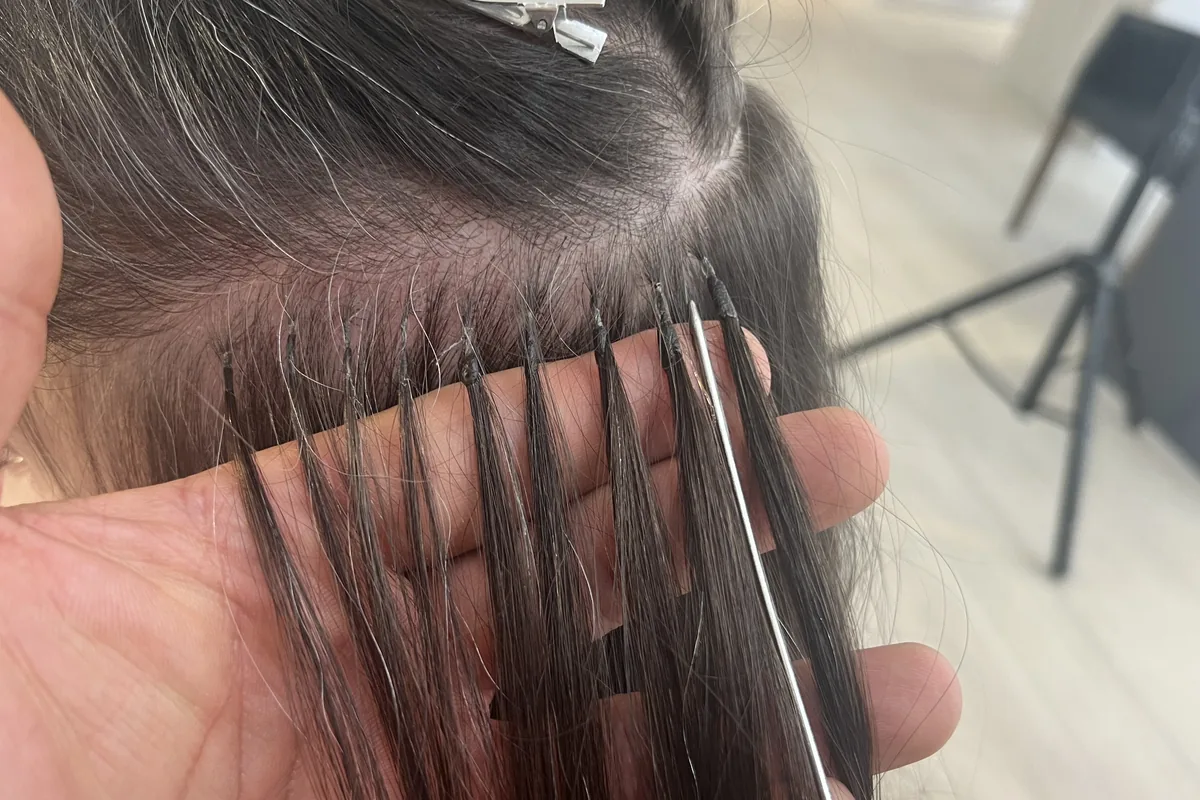
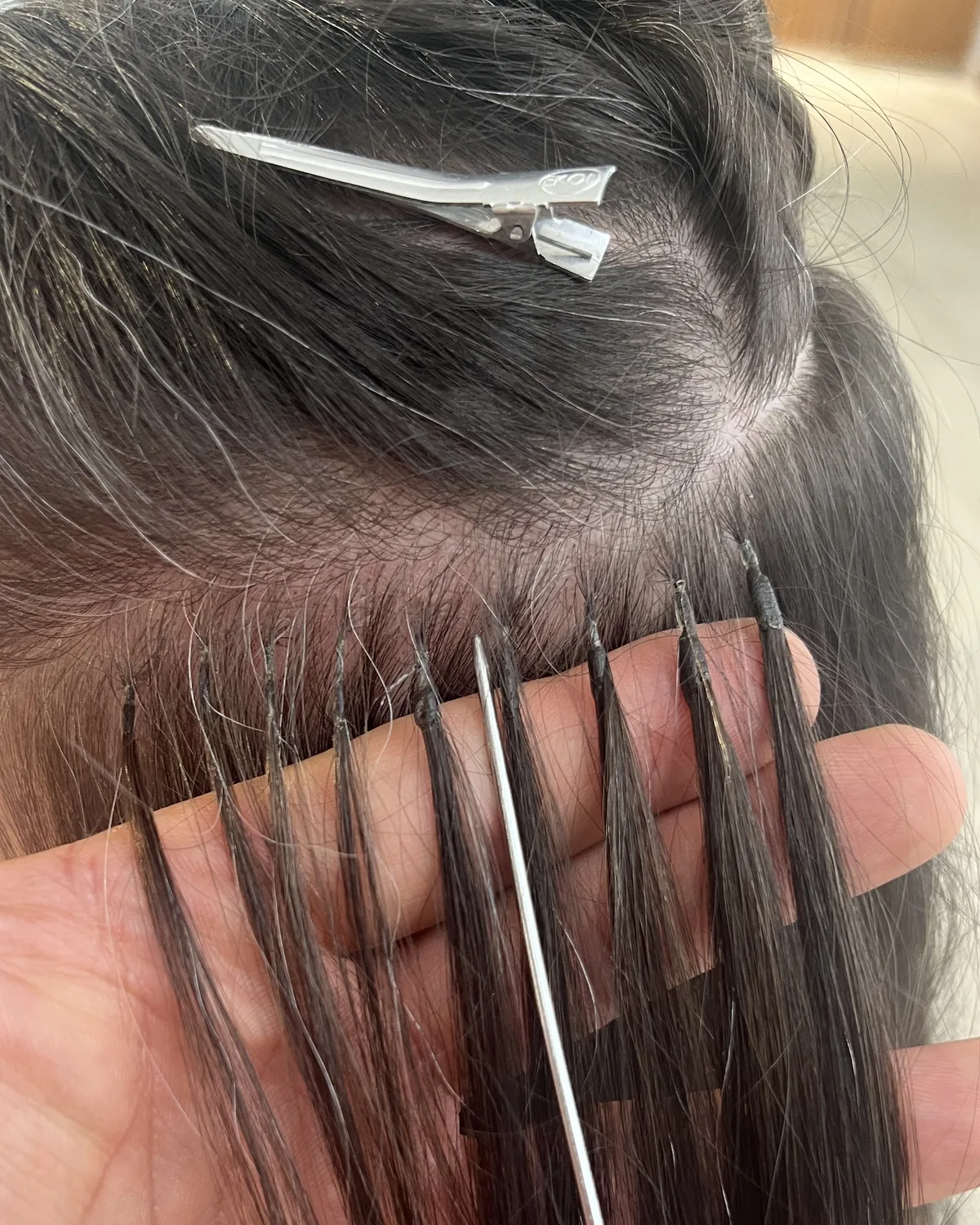
On the day, a joint sits close to the scalp; every week afterwards carries it further out. The mass does not change, the distance between it and the root does, and the same weight on a longer arm turns the root harder.
The second is quieter. A fibre that has finished its cycle normally works its way down and out; where a joint sits that exit is closed, so it stays behind and more collect behind it. Both explain the loose hair seen at removal.
Washing: the lather belongs to the lengths
Only one thing changes about washing: what the hands do. Stand with the hair hanging as it falls and let water run from the crown down; tipping the head forward gathers the length into one mass.
Work diluted shampoo into the scalp with the pads of the fingers, pressing rather than circling: scrubbing across the attachment zone walks neighbouring joints together. Keep the other hand cupped under the section.
- Start conditioner and masks below the line of the joints
- Rinse until nothing at the base still feels slippery
Drying is a job at the base, not at the ends
The lengths dry themselves; the base does not. The area holding the joints sits enclosed beneath a layer of hair, so drying starts at the roots: part the hair, aim the air at the base, keep the heat low.
Dryness is judged by hand, not by eye — hair that looks dry can still be cool around the joints. Going to bed with a damp base is the most avoidable mistake here: wet fibres cling, and a pillow holds the patch under friction for hours.
Brushing from the ends upwards, and the night
A brush started at the roots collects every knot below it and drags the bundle across the joints. Reversed it costs nothing: enter at the very ends, clear that part, re-enter a few fingers higher, repeat. Resistance is the only thing that reaches a joint.
At the base the tool separates rather than brushes, and fingers are often best. Hold the hair above a joint with the free hand so it takes the force.
Sleep is hours of unsupervised friction, and loose hair tangles towards the base. A loose plait or a low tie keeps the weight below most joints; a high, tight tie lands the pull on the handful beneath it, night after night.
Choose products by what they do, not by what they are called
Three functions matter around an attachment: cleaning, film-forming and lubricating. Cleansers, sulphated or not, lift oil and residue, and the surfactant matters less than whether the base is genuinely cleaned — avoiding washing loads the attachment zone.
Film-formers such as silicones coat the fibre and buy slip through the lengths; around a joint there is no tangle to release, so the coating just sits. Oils lubricate — useful low down a length, unhelpful at the base, where they alter the surface a joint is holding.
One rule covers it: generous on the lengths, selective at the base — dry shampoo included.
Heat, and colour work on hair already carrying extensions
Styling heat starts below the line of the joints; the reason is the joint rather than the hair — a material given its shape by heat can be given another.
A root tint, a toner, a lightener or a correction puts product exactly where the joints are. It can be possible, but it is arranged rather than stumbled into: whoever is mixing needs to know which system is fitted, what the joint is made of, and how the product is cleared.
Extension hair is not attached to anything living, so it does not recover after a process. Hence colour is settled before a fitting.
What sea water, chlorine and sand change
Set the chemistry aside; the mechanical change governs the routine. Wet hair is heavier and that weight is carried by the same joints, the fibre surface alters, and strands cling more readily — so anyone who leaves the water, twists the hair up and leaves it has locked all three together at the base.
Sand does not dissolve: it stays at the roots and every movement walks it between the fibres. The hour afterwards is the whole of it — flush the base and dry it.
What a professional check is actually looking at
A check is an inspection, not a treatment: the nape and the crown cannot be seen by the wearer, and the base is only known once somebody looks.
What follows depends on what is found: a point taken out, load moved, or the plan stopped. Our monthly check covers one situation only — Micro applied by SACH & VOGUE HAIR, where the client is still carrying hair supplied or applied by the company. It is not a medical guarantee and not automatic for every buyer.
- How far each joint has travelled, and whether that distance is even
- Joints that have rotated, slipped or become visible at a parting
- Whether accumulation still separates under a finger
The picture is not the same in every family
The daily technique is shared; what changes is where attention goes. Individual bonded points — Micro, keratin bond and Nanofilament — put the work into the spaces between joints, so the base takes time; but a problem at one point stays there.
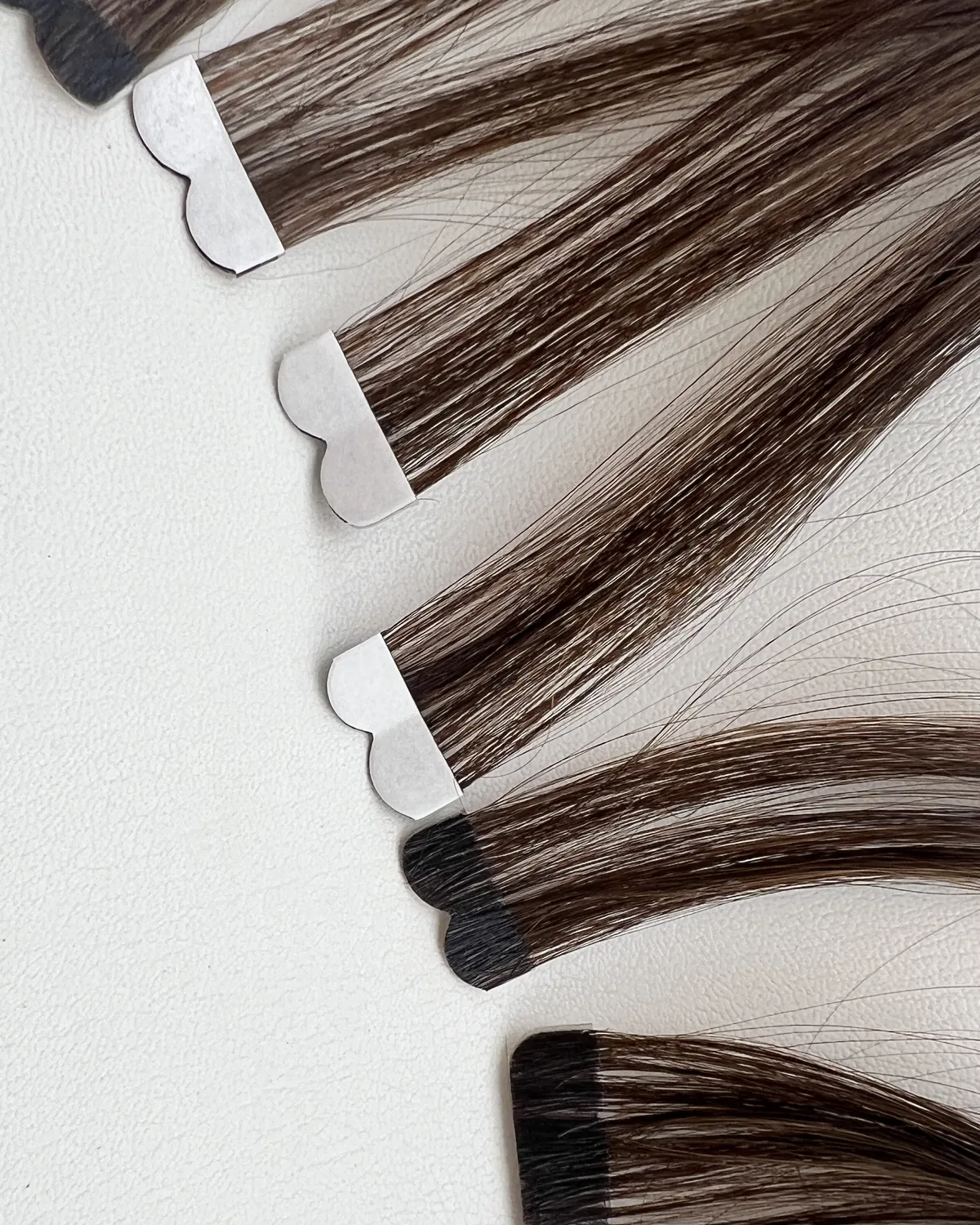
Tape-in and panel systems invert that: few units, each a broad surface, so the enclosed area is larger and drying takes longer. Oils and film-formers cause their worst trouble here.
In sew-in and weft work the load runs along a line rather than at points, and that line is the whole question: reaching the scalp beneath it, washing and drying it. Clip-in sits outside this page — it comes out at night and leaves no permanent attachment.
Why there is no interval on this page
You will not find a figure in weeks here, and the omission is deliberate. Four things set it and all four are personal: growth rate, texture and density, the total load and its spread, and daily handling.
A published number is one given to a head nobody has seen. The useful skill is reading your own set — joints appearing along a parting, a patch where the brush catches, an accumulation that no longer separates. Worn locally, that reading can be done in person at the Fethiye workshop.
Frequently asked
Common questions
How should hair extensions be washed?
Stand with the hair hanging as it falls and let water run from the crown down; tipping the head forward gathers the length into one mass, and every tangle it makes ends at the base. Work diluted shampoo into the scalp with the fingertips rather than circling across the attachment zone, support the section with your free hand, start conditioner below the joints, and rinse until the base feels clean.
How often should hair extensions be washed?
No frequency is published here, because the answer belongs to the person rather than the product: how quickly the scalp produces oil, which products are in use, whether swimming or training is involved, and which system is fitted. The direction is clear enough though — avoiding washing loads the attachment zone with residue, and a loaded base is where tangling around joints starts. Judge it by the base, not the calendar.
Can I have my roots coloured while wearing extensions?
It can be possible, but it is arranged rather than fitted in. A root tint, a toner, a lightener or a correction puts product exactly where the joints sit, so whoever is mixing needs three answers first: which system is fitted, what the joint is made of, and how the product will be cleared from around it. Without them, postponing is the right call.
Who is the monthly check for?
One situation only: where Micro was applied by SACH & VOGUE HAIR and the client is still carrying hair supplied or applied by the company. The appointment is an inspection — how far each joint has travelled, whether any have rotated or become visible at a parting, and what stage any accumulation has reached. It is not a medical guarantee and not automatic for every buyer.
Related pages
Continue reading
Tell us which system you are wearing and what your week looks like, and we will describe what maintaining it involves.
Method, colour, length and grams are settled by consultation before anything is quoted.