Removal technique
Hair Extension Removal: A Bond Is Released, Never Pulled
Removal is a procedure with its own technique, not a tidying-up step at the end of a fitting. One principle governs it: a bond is released, never pulled. The work is done by the correct release agent and the waiting it is given, not by force. The mechanics differ by system — a bonded point is softened and broken down, tape is released along the panel, a sewn weft has its thread cut, and a clip-in has nothing to release. Two finishing steps are never optional: clearing residue, and the comb-out at the base.
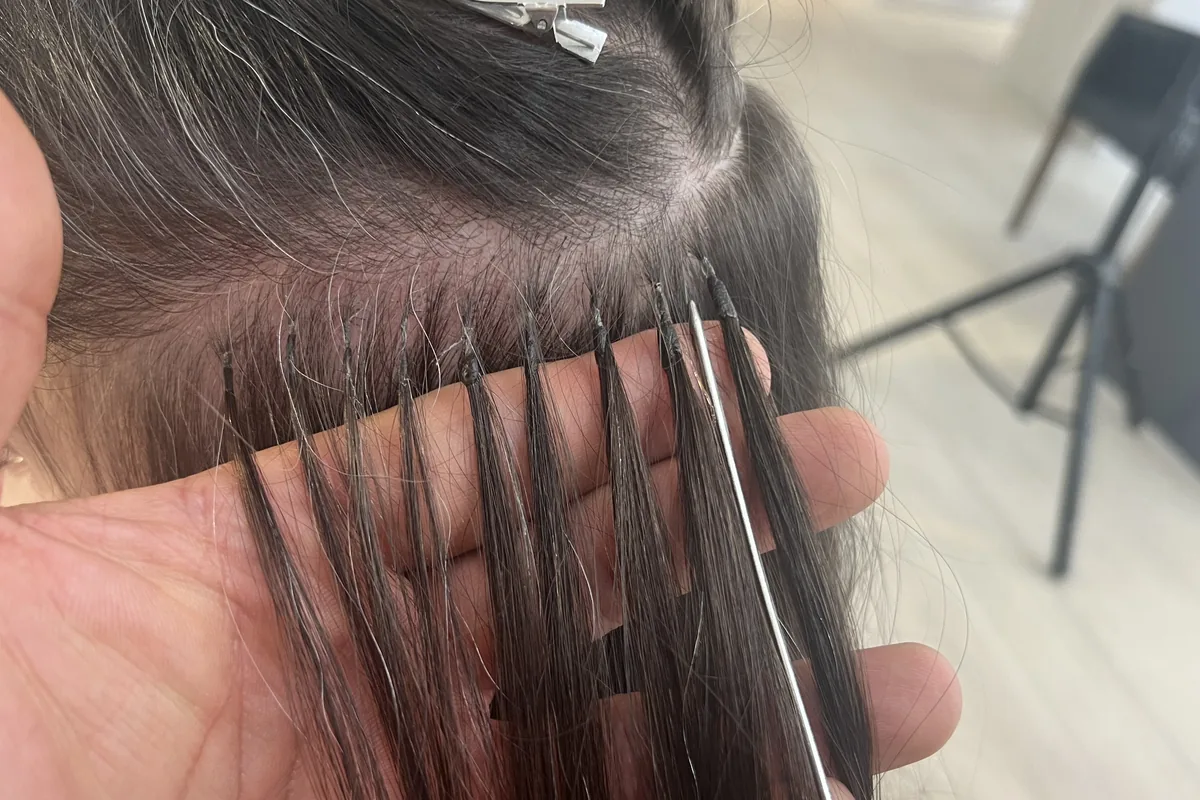
Almost everything written about extensions is about the day they go in. The day they come out gets arranged in a hurry, once the set has outstayed its plan.
What follows is removal as a technique: what is released in each family, the two steps never skipped at the end, and how the appointment is planned.
Removal belongs to the original plan
A set has two dates and usually only one is agreed. Where the second was never discussed, the set stays in long past its usefulness, because nobody settled who takes it out or with what. Three questions belong to the fitting appointment: what opens this bond, whether that product is to hand, who does the work. Write the answers down. How each family attaches is on the methods page.
The governing principle: the product and the waiting do the work
One sentence covers every system: the bond is released, and the hair is never pulled off it. The agent opens the path; the hand follows.
Resistance is information, not an obstacle. Where a strand does not come away easily the answer is more product and more waiting, never a firmer grip: force only moves the load onto the wearer's own hair, at the one point where it is held. Good removals are quiet.
Four attachment families, four different things being undone
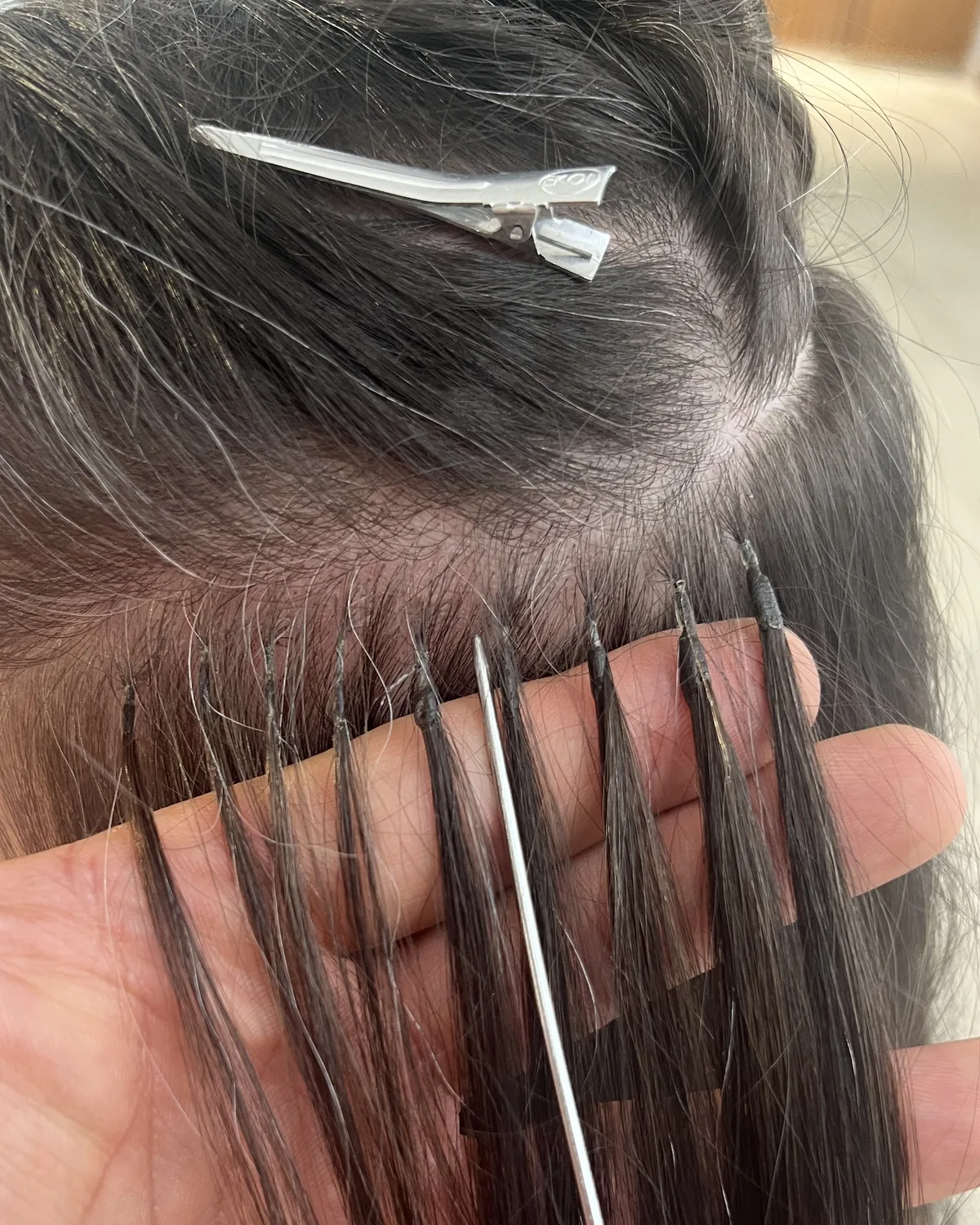
In bonded systems — keratin bonds and our own Micro strands among them — the agent softens the polymer at the tip. The bond is taken with the correct tool and broken down, its structure destroyed rather than cut, so it no longer grips the fibres inside and the strand slides down the length and off the ends. Sliding a bond still intact is the commonest error here.
Two families get merged by name. Micro Ring, Micro Link and Micro Bead fasten mechanically; nothing in them is dissolved. Micro is an individual bonded strand formed with Italian keratin — not a ring, bead or loop.
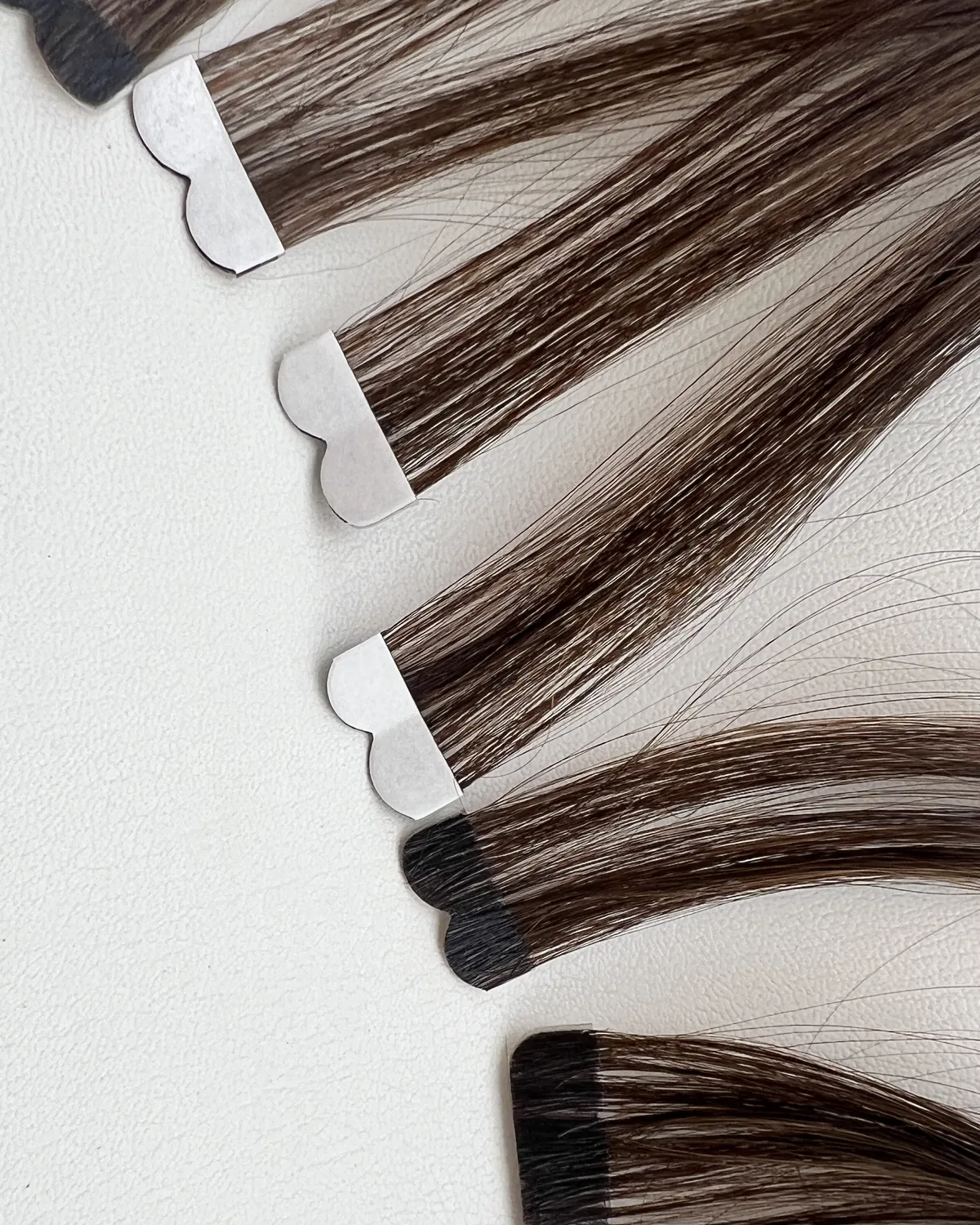
With tape a surface gives way rather than a point. The agent enters at the edge and the adhesive is released along the panel until it lifts of its own accord — not peeled from a corner, which gathers the whole grip into one line of hair.
A sewn weft involves no chemistry; what is undone is stitching. The hazard is a different one — being certain the blade rests on thread and not on the hair lying in and around it at the base. What separates them is a hand that exposes the thread before cutting.
A clip-in has nothing to remove chemically: the combs open and the piece lifts out. That is the point of the format, and why it is never a permanent attachment.
Residue is cleared before anything else happens
Once the strands are off, residue is the first job rather than the last. While any of it is in place the fibres stay bound together and a comb cannot pass. It is easy to miss too: wet hair conceals it, and it shows up once dry as a roughness a fingertip catches.
The comb-out at the base, and why it is the step nobody expects
All through the period the set was worn, hair at the base that could not leave the head was held there. When the attachments open it is free at once, and reaches the comb together.
So the work is done in stages: from the ends upwards, in short passes, one section at a time. The purpose is to undo the tangle, not to travel through it — a comb taken from the root down in one movement loads a long accumulation onto a single line of fibre.
It can look alarming, and being told beforehand changes how it feels. Part of what appears is hair that would have shed naturally over the period the set was worn, held in place by the bond instead of leaving the head with brushing and washing. That describes a mechanism, not a proportion — nobody can look at the comb and say which strand is which.
There is no diagnosis here: visible thinning, tenderness that does not settle, or unusual shedding belongs with a qualified professional.
The hair is fragile for the rest of that day
The base has been held at fixed points, has met a product and has just been combed through, so fibre and scalp are less tolerant than usual for the rest of the day. What should not happen is a mechanical list: no tight ponytails or braids, no aggressive brushing, no high heat, no going to bed with wet hair, and — where it can be moved — no lightening, perming or straightening. What should happen is unremarkable: a gentle wash, the hair loose, the roots dried.
Refitting the same day, or leaving the hair to rest
Refitting in the same appointment is common and often sensible: the scalp is handled once, new sections can be placed away from where the previous ones sat, and no interval passes with neither set on. Resting has its own reasons — tenderness at the scalp, a colour or a cut booked around it, a placement plan that has to change. No waiting period is given here; the decision is made once the base can be seen. Keeping a set serviceable in between is covered on the maintenance page.
Planning a removal appointment
Book removal as its own piece of work; sharing a day with a new fitting, it still takes its own share of it. What shortens it is information, since an unknown bond must be tested before it can be opened. If we fitted the set it is on file; otherwise send what you have, or bring it to the Fethiye workshop.
- The system fitted, with product details if you have them
- Where it was fitted and by whom
- Which release agent the bond specifies, in writing if possible
- Hair clean, dry and combed, no product at the base
Removal at home: what the mechanics actually demand
People remove extensions at home, and it is worth describing what makes it difficult. Sight is the first constraint: nobody can see their own nape or crown, or judge in a mirror whether a bond has opened. The second is the product, since each family is released by the agent specified for it. The third is hands — one holds the section, one works the tool, one supports the strand, and with no third hand the support falls to your own hair. Scissors are their own case: from that angle it is not visible whether the blade is on the bond or on the hair running through it. Done at home anyway, the rules do not change — specified agent, waiting unshortened, residue and comb-out not skipped. How a set was cut to sit with your own hair is a different discipline, on the blending page.
Frequently asked
Common questions
Does removing hair extensions damage your hair?
Removal is not in itself a source of damage; what decides the outcome is whether the steps were followed or skipped. Load transfers to the wearer's own hair when a bond is pulled before it has been released, when residue is left in place, or when a strand is worked at before the base has been combed out. We offer no safety guarantee — only an account of which decisions increase it.
Why does so much hair come out when extensions are removed?
Hair at the base that could not leave the head while the set was worn stays where it is, held rather than released to brushing and washing. When the attachments open and the section is combed, all of it becomes visible at once — so what looks like a single day's shedding may be what became visible in a single day. We do not claim that of every strand, and nobody can make the distinction by eye. Persistent shedding belongs with a qualified professional.
Can I have a new set fitted on the same day?
Usually yes, and there are practical reasons to: the scalp is handled once, the new sections can be placed away from where the last ones sat, and there is no gap in between. It is not automatic. A second appointment is better where the scalp is tender, where a colour service or a cut is planned around it, or where removal turns something up.
Can I remove hair extensions myself at home?
Some of it can be, and the difficulty is not dexterity but three constraints. You cannot see your own nape or crown, so you cannot judge whether a bond has opened. Each family is released by the agent specified for it, and without that product you either achieve nothing or dry the hair for nothing. And with no spare hand to support the strand, the support falls to your own hair.
Send the system you are wearing, where it was fitted and anything you were told about the bond, and we will set out how removal should run.
Method, colour, length and grams are settled by consultation before anything is quoted.