Training · Fethiye workshop
Hair Extension Training: Learning the Order the Decisions Come In
Most of what decides a finished set is settled before anyone picks up a tool. Hair is assessed, a system chosen, grams and load planned, sections taken, colour built, the cut placed into the client’s own shape, and removal scheduled from day one. Training in Fethiye follows that chain in order, privately and one-to-one, in Turkish or English. What is issued at the end is a certificate of completion, not a state award.
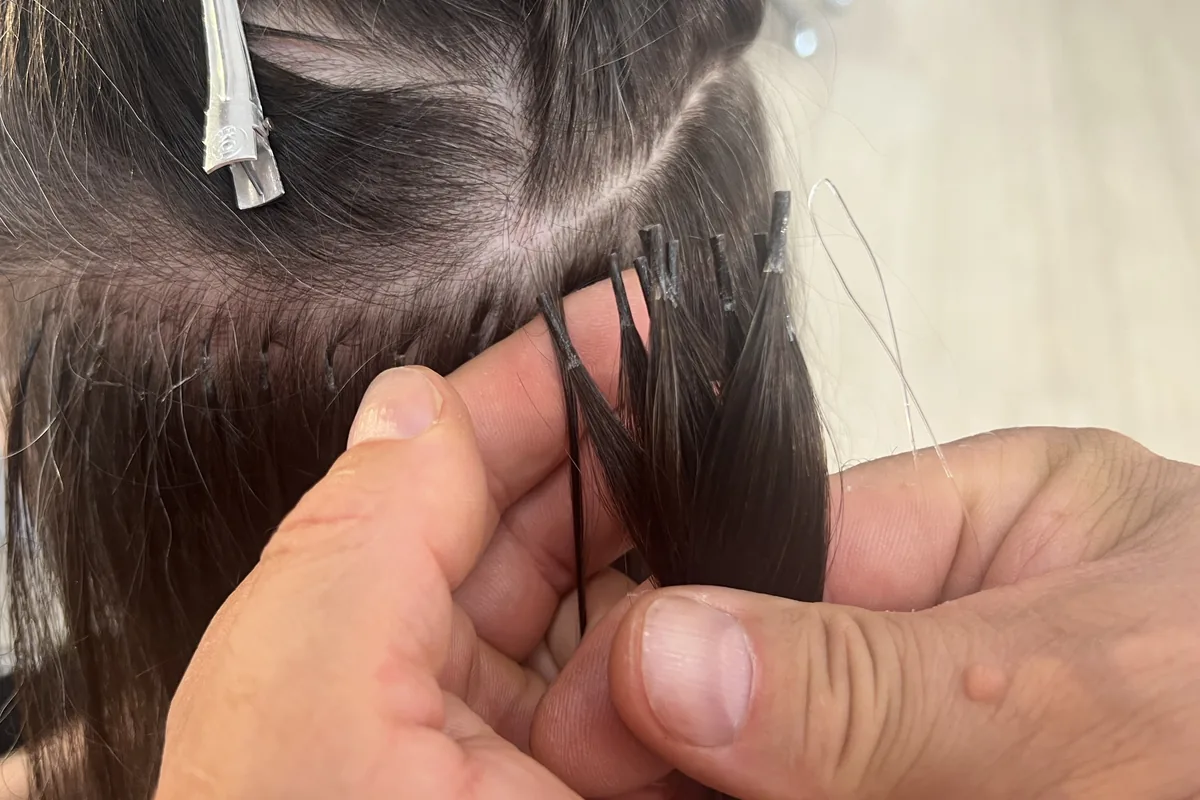
When a set goes wrong the evidence points backwards rather than at the hands. Tension along the bond line, a shadow at the third month, a removal that runs too long — each is usually a decision taken before the client sat down.
So this page sets out what is taught, not the technique itself.
A fitting is mostly judgement; only the last part is manual
Ask what extension training is and most people picture the hands. Hands are taught — but they execute a plan rather than interrogate one, and speed never rescues a plan that was wrong to begin with.
The links run one way: colour is not settled before weight, nor the cut before placement. What each family is sits on the methods page and the systems comparison; training adds which question each of those facts answers.
First judgement: reading hair, and knowing when to advise waiting
A consultation is not an order form. The first skill is measuring the gap between what a client describes and what her hair can carry, and saying which must move.
Almost none of it survives a photograph: the shortest layer where joints would sit, density in the carrying zone, behaviour when wet, the hairline, and a history only the client can supply. Observation stays inside professional, non-medical limits — recognition, not diagnosis, and referral onward. Between yes and no sits middle ground: fewer grams, a shorter length, a partial set. Load is on the maintenance page.
Second judgement: a system chosen for a head, not from a catalogue
Five families are worked through: Tape-In, Keratin Bond, Micro Capsule, Nanofilament and Weft or Sew-In, with topper integration alongside them and colour and density planned across a set and a topper together.
What each family is stays on its own page — Micro among them. Training supplies the reasoning for choosing: a panel’s continuous surface helps one head and blocks the next. Density, strand diameter, chemical history, target length and the routine a client will keep are settled first, and the system follows from those five.
Third judgement: grams, unit weight and where the load lands
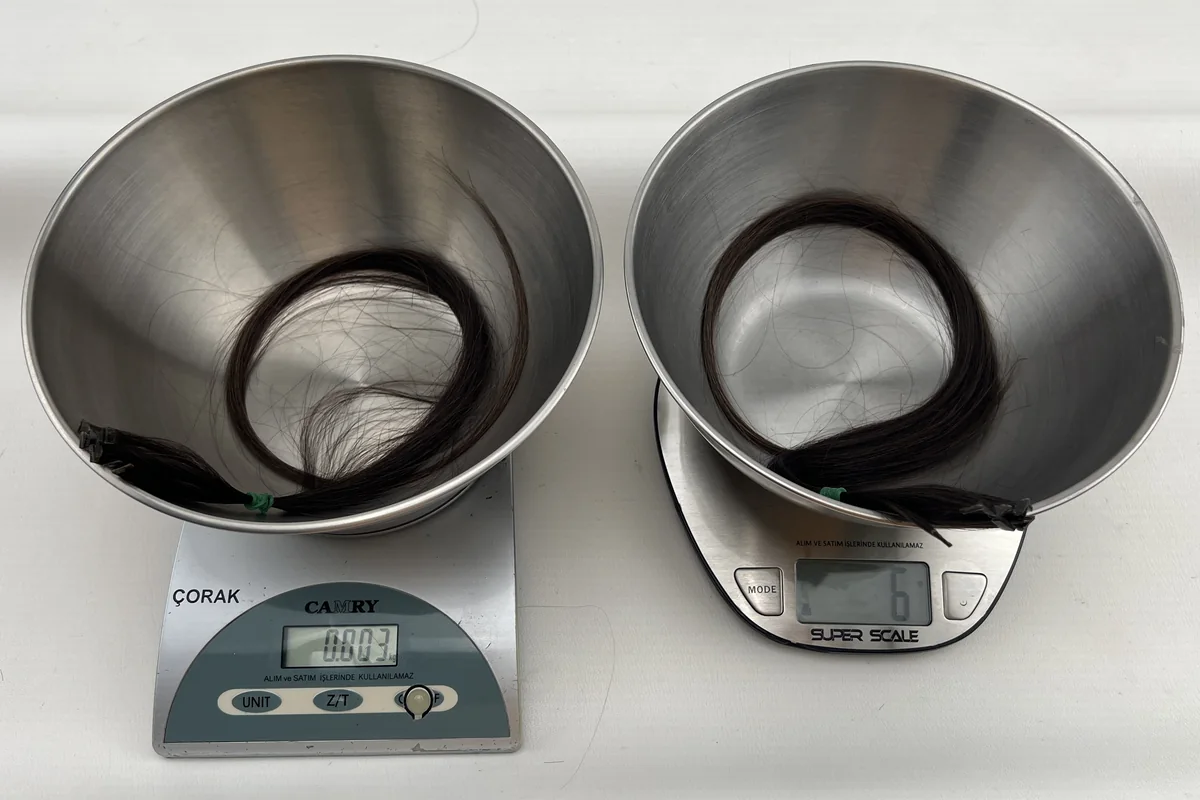
Total grams and per-unit weight are separate decisions, and conflating them is where plans fail. The total describes the result aimed at; the unit weight says how many joints it divides into. The same grammage becomes two different appointments.
The third variable is distribution, not count: what decides it is how many of a client’s own fibres each joint hangs from, and which zone. So the arithmetic is worked at the scale: one target, three unit weights, three plans.
Fourth judgement: sectioning, the half no factory can do for you
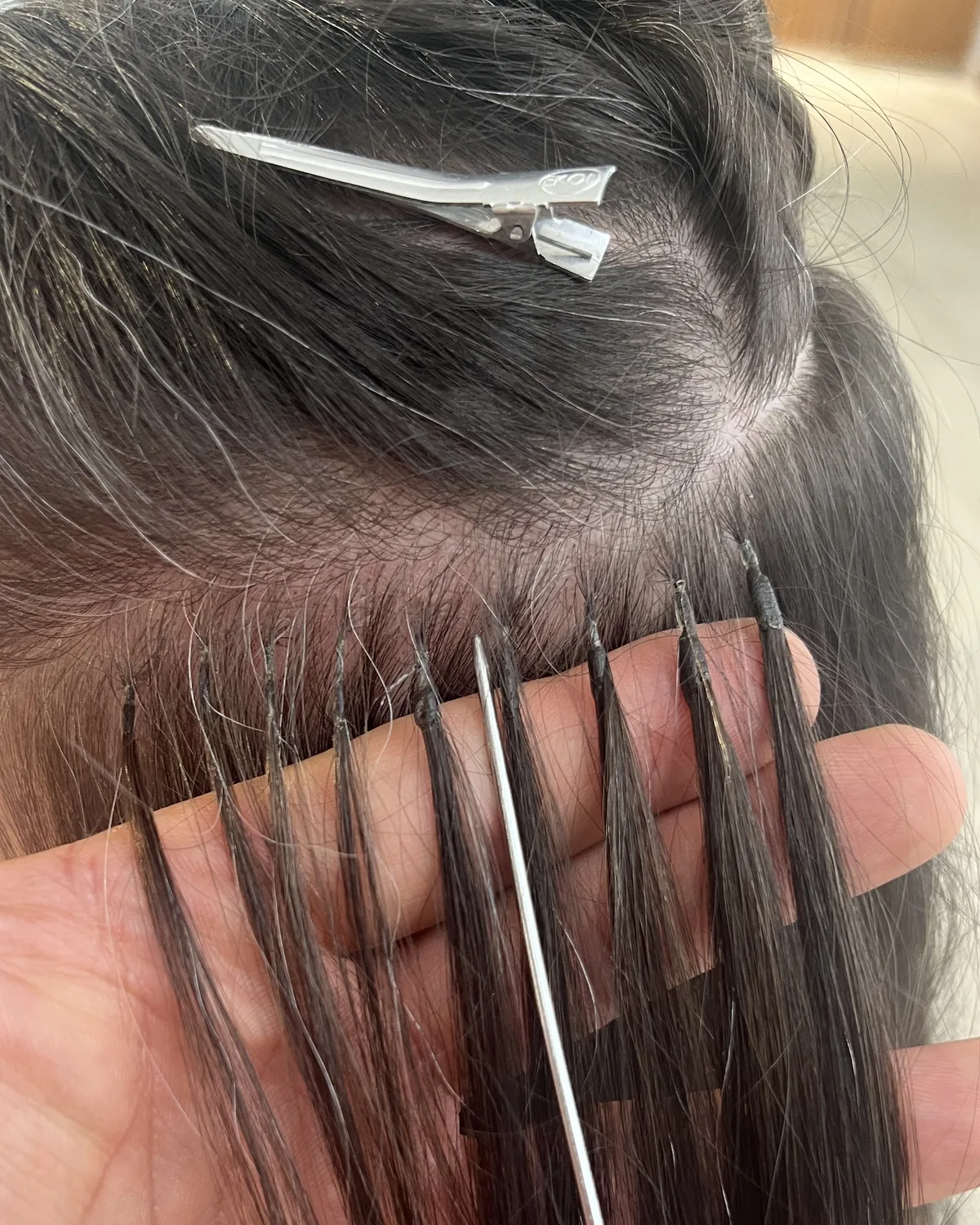
Every joint has two halves and only one is made in a factory. Strand weight is decided at our bench; the section carrying it is taken in the chair, by eye. Leave that half untaught and the best product still produces poor work.
What is taught is a test, not a measurement. Is the section proportionate to the unit, is the line clean, has the parting zone been left alone, does the layout follow this head’s own density?
Fifth judgement: colour is three verdicts delivered at once
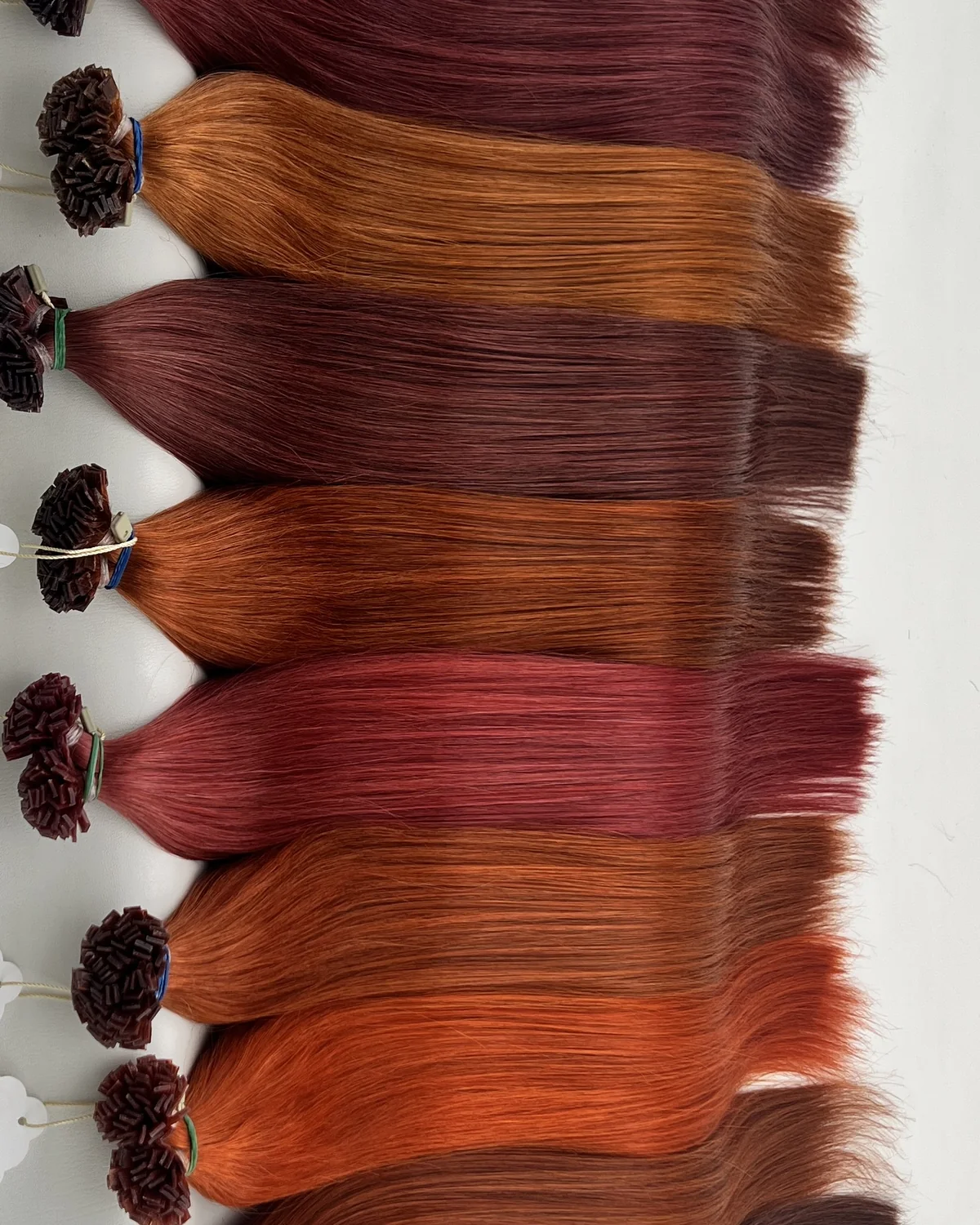
Colour takes the most hours: depth, undertone and reflect are judged at once. How they separate is on the colour matching page; what is practised here is the decision, not the definition.
Four questions follow in order. What are the root, mid-lengths and ends doing? Which is the match made against? One code, or a blend? And in what proportion — a question that has already left the chair for the bench. Comparison is made in daylight, in among the client’s own hair.
Sixth judgement: the cut is where the plan becomes visible
Extension hair is made without knowing the client’s shape and placed into it at the end of the appointment. A hard line is usually a density fault rather than a colour fault, and the mechanics are on the blending page.
What is practised first is not scissor work but the order of the decisions: which layer opens, where internal layers come from, how far the ends taper. Get that order wrong and there is no recovery, because extension hair has no living structure to rebuild itself.
Seventh judgement: aftercare and removal are designed on day one
Aftercare belongs to the specification, not to the conversation once the hair is in. The routine is on the maintenance page and taking a set down is on the removal page.
Training adds two disciplines. The handover: what the client is told, why each product was chosen, which symptom means book rather than wait. And the record: system, per-unit weight, joint count, shade codes and the specified release agent, written down — the only information left to whoever removes the set later. Removal is its own appointment, and no step relying on force is right.
Inherited work: taking over a plan somebody else built
A share of the work that arrives was never planned by whoever now holds it: clients move city, appointments slip, hair grows and the load travels with it. Inherited work is ordinary, and nobody’s fault.
What is taught is an inventory rather than a verdict. Which system is in, and what opens it? How far have joints travelled? Has matting started at the base? Where has colour drifted — in depth, or undertone? Three outcomes are legitimate: correct inside the plan, rebuild, or rest the hair.
What a production floor adds to every link in the chain
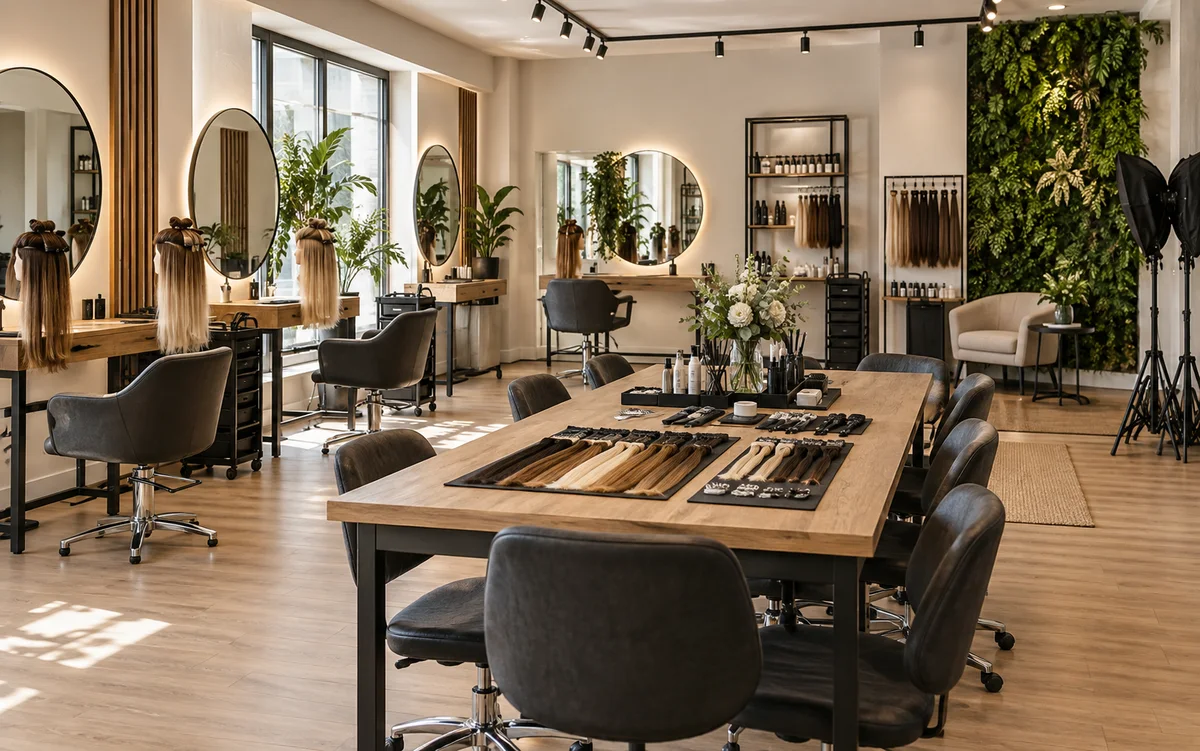
Teaching happens inside the building where the goods are made, not in a salon: sorting, drawing, colour work, tip formation and weft sewing under one roof. the production bench pages describe what each station does.
The contribution is concrete. When unit weight is discussed the scale is on the table; when blending is discussed the component shades are mixed by hand. That is a short feedback loop, not a claim of superiority: a difficulty seen in the chair goes back to the bench. Both sides are on the manufacturer page and the Fethiye page.
The four programmes, and what a fee covers
Teaching is private and one-to-one: one trainer, one student. That is a method rather than a courtesy — the chain above only works through the student’s own hands. Sessions run in Turkish or English, with Murat Kolukırık, founder of SACH & VOGUE HAIR.
There are four options. The One-Day Method Intensive is €850, the Two-Day Professional Intensive €1,700 and the Three-Day Complete Academy Programme €2,500. Private training for a salon team is quoted once the scope is agreed.
The fee covers the professional hair, tools, method-specific products, consumables and practice materials used during that training. What is included varies by programme and is confirmed in writing.
What the practical hours are worked on
The Academy does not source or provide a student’s live model. Where live-model work is planned the student brings the model, photographs are sent beforehand, and suitability is approved before training starts.
That approval is not administrative — it is the assessment link applied to the training itself, since practising on hair that should not be loaded teaches a wrong decision by repeating it. Where no suitable approved model is available, practical work continues on a mannequin head and professional training material, as far as appropriate.
The certificate, and what is worth stating plainly
Students who complete a programme receive the Sach & Vogue Hair Academy Certificate of Completion. It records the scope of the training completed, and it is worth being exact about what it is not.
No employment, income or outcome is promised here, and none can be. Nothing taught is medical; diagnosis and treatment belong to a qualified professional.
- Not a state diploma, licence or vocational qualification
- No promise of employment, income or a given result
- No published module durations, class sizes or pass rates
- No diagnosis, treatment or medical assessment
- No live model provided; one you bring is approved first
Frequently asked
Common questions
I already fit extensions professionally. What would this add?
For an experienced fitter the gap is rarely manual — it is the reasoning underneath a habit. A routine that has worked for years, but whose logic was never made explicit, offers no way back the first time it fails on unfamiliar hair. The training opens the chain backwards: why this unit weight, why this section thickness, why the match was made where it was.
Why is so much of the time spent away from the application itself?
Because that is where the faults originate. Tension along a bond line, a shadow at the third month, matting at the base, a removal that runs long — none of those trace back to how fast somebody worked. Hands improve with repetition; hands trained without reasoning execute the same flawed plan faster. Assessment, grams, placement and colour therefore carry as much weight as the application.
Does the certificate carry any official standing?
No, and it is better to say so plainly than to leave it ambiguous. The document is the Sach & Vogue Hair Academy Certificate of Completion, issued by this academy. It is not a state diploma, not a government-issued vocational qualification, and not a licence to practise anywhere by itself. It evidences the scope of training completed; no claim of accreditation is made.
What happens to the practical work if I cannot bring a model?
It continues. The Academy does not source or provide a student’s live model, so where live-model work is planned the student brings one, sends photographs in advance, and has suitability approved beforehand. If no suitable approved model is available, the practical hours run, as far as appropriate, on a mannequin head and professional training material. Nothing is worked on unapproved hair, since assessment is part of what is taught.
Is the teaching tied to your own product range?
No. The families covered are Tape-In, Keratin Bond, Micro Capsule, Nanofilament and Weft or Sew-In, with topper integration and colour-density planning alongside them. Where a family is right, and where it is wrong, is argued against the same criteria — our own products included. The spine is an order of decisions rather than a product line, and it holds whatever brand is on the bench.
Tell us which decisions you get stuck on and what hair you work with, and we will say which programme fits.
Method, colour, length and grams are settled by consultation before anything is quoted.