SACH & VOGUE HAIR · BUTTERFLY WEFT
Butterfly Weft Hair Extensions: A Complete Guide
Butterfly Weft is a SACH & VOGUE HAIR weft construction. Hair is organised as a continuous row; the upper section is prepared at 2 cm and can be folded into an approximately 1 cm application profile. It retains weft density while allowing a more compact, controllable row head — but that does not automatically make it the right choice for every head of hair. Butterfly describes the product construction, not a new attachment mechanism such as keratin, tape or nano.
Butterfly Weft has become a familiar phrase in the professional weft market, yet much of what is written about it treats the name as though it were a new attachment family. It is not. Butterfly Weft is a foldable upper construction within the weft family — the same family as Machine Weft. At SACH & VOGUE HAIR we prepare the upper section at 2 cm; during application it can be folded to create an approximately 1 cm profile. The objective is to carry substantial hair density through an organised row while keeping the row head more compact and easier to plan in layers.
We have manufactured Machine Weft for years. Butterfly Weft is our own construction from the same production line, built to a separate upper specification. Machine Weft remains a strong, valid product — Butterfly does not replace it. The difference between the two is the top-line geometry and what that means for row planning, not a change in attachment chemistry or a move away from grams-based weft logic.
The most common confusion is between the product and the application architecture. A weft — whether Machine or Butterfly — is the hair panel you purchase. Beaded rows, sewn support tracks and hybrid bases are professional methods for securing that panel to natural hair. The same Butterfly Weft panel can be fitted with different application approaches; conversely, a beaded-row installation can use different weft constructions. Those are independent decisions.
This page covers Butterfly Weft from a manufacturer and application perspective: construction, layered row planning, grams, Double Drawn hair, colour, maintenance, reuse and total cost of ownership. The broader weft framework sits on weft hair extensions; method families on hair extension methods and the systems comparison.
What is Butterfly Weft?
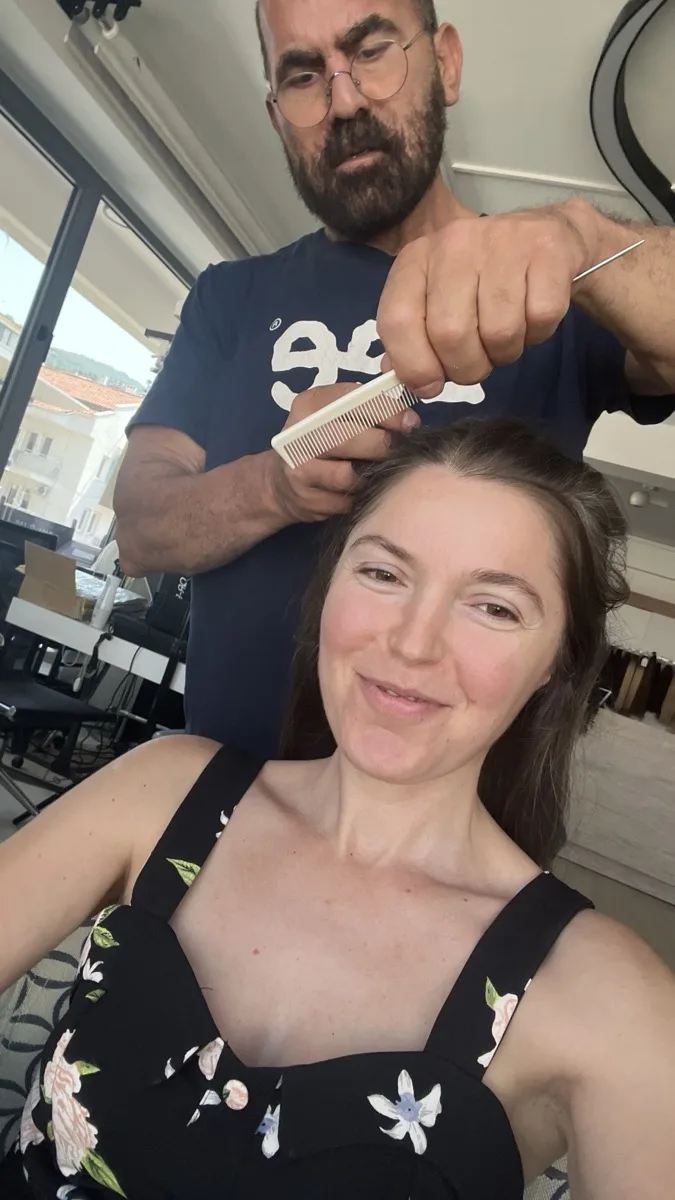
Butterfly Weft is a continuous panel of hair whose strands are secured together along one upper edge — the same fundamental geometry as any weft. Below that edge, the hair falls freely to its stated length. What distinguishes Butterfly is the foldable upper construction: the top section is prepared at 2 cm and can be folded during application to create an approximately 1 cm profile.
Folding does not reduce the amount of hair in the panel. It changes how the row head sits against the scalp and how multiple rows accumulate when layered. A weft carries density efficiently because many hairs are already organised into one row before fitting; Butterfly refines the row head without abandoning that efficiency.
Butterfly Weft does not invent a new attachment mechanism. It is not keratin, tape, nano or any other bond family. It remains within the weft family, and how the panel is secured — sewn track, beaded row or another professionally prepared base — is an application decision made separately.
Three layers should be kept distinct when evaluating any weft order: the hair specification (length, grams, colour, texture, Draw standard); the weft construction (Machine Weft or Butterfly Weft); and the fitting method (how the professional creates the support row and secures the panel). Those three work together but are not interchangeable.
Why is it called Butterfly Weft?
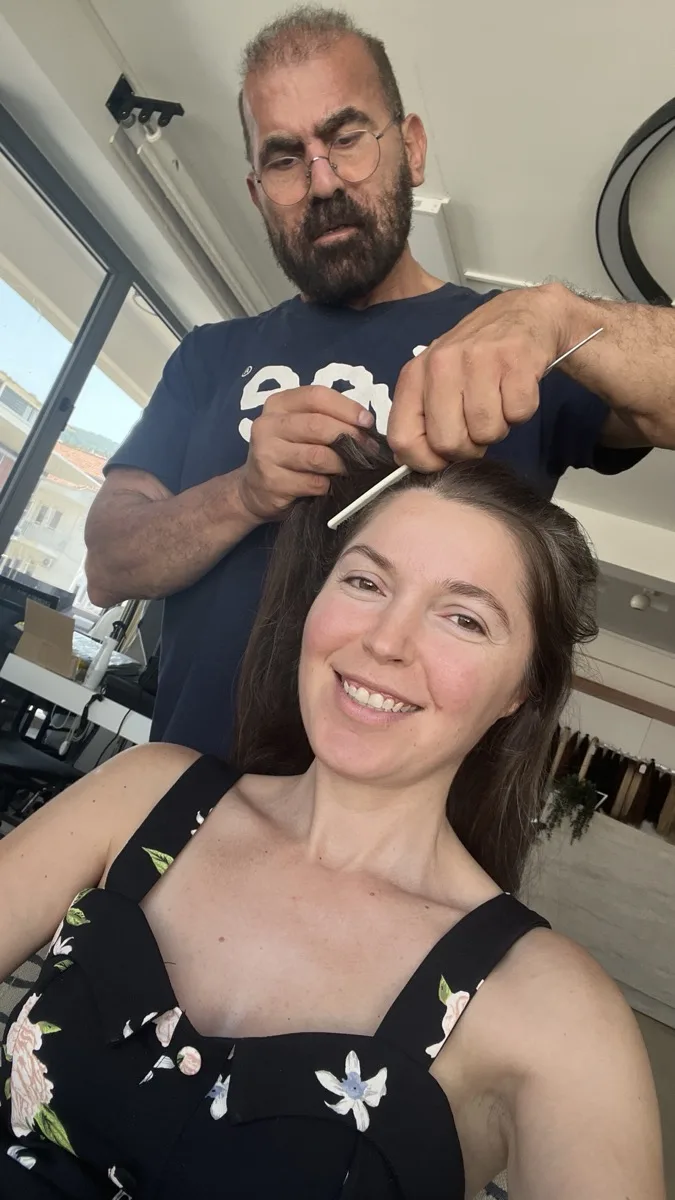
The name describes how the upper construction is used, not merely a marketing label. During application the top section is folded from the centre, creating a two-wing form — similar in motion to folding a butterfly wing. That fold converts the 2 cm production width into an approximately 1 cm application profile.
The folded profile can produce a finer row head on the scalp. When several rows are planned, the cumulative thickness of each row head matters for concealment. A more compact profile can help manage that accumulation — though it is not an automatic guarantee of invisibility on every head.
At SACH & VOGUE HAIR, Butterfly Weft refers to our own production specification. Another manufacturer selling under a similar name may be offering a different construction. Genius Weft, Invisible Weft, Seamless Weft and Hand-Tied Weft are used inconsistently across the international market; the decision should rest on the actual upper-edge construction, not the trade name alone.
Hand-Tied Weft is not part of the SACH & VOGUE manufacturing portfolio and is not claimed here. Butterfly Weft is a developed construction within the machine-stitched weft family — not hand-tied production and not a patented proprietary technology claim.
Butterfly Weft vs Machine Weft
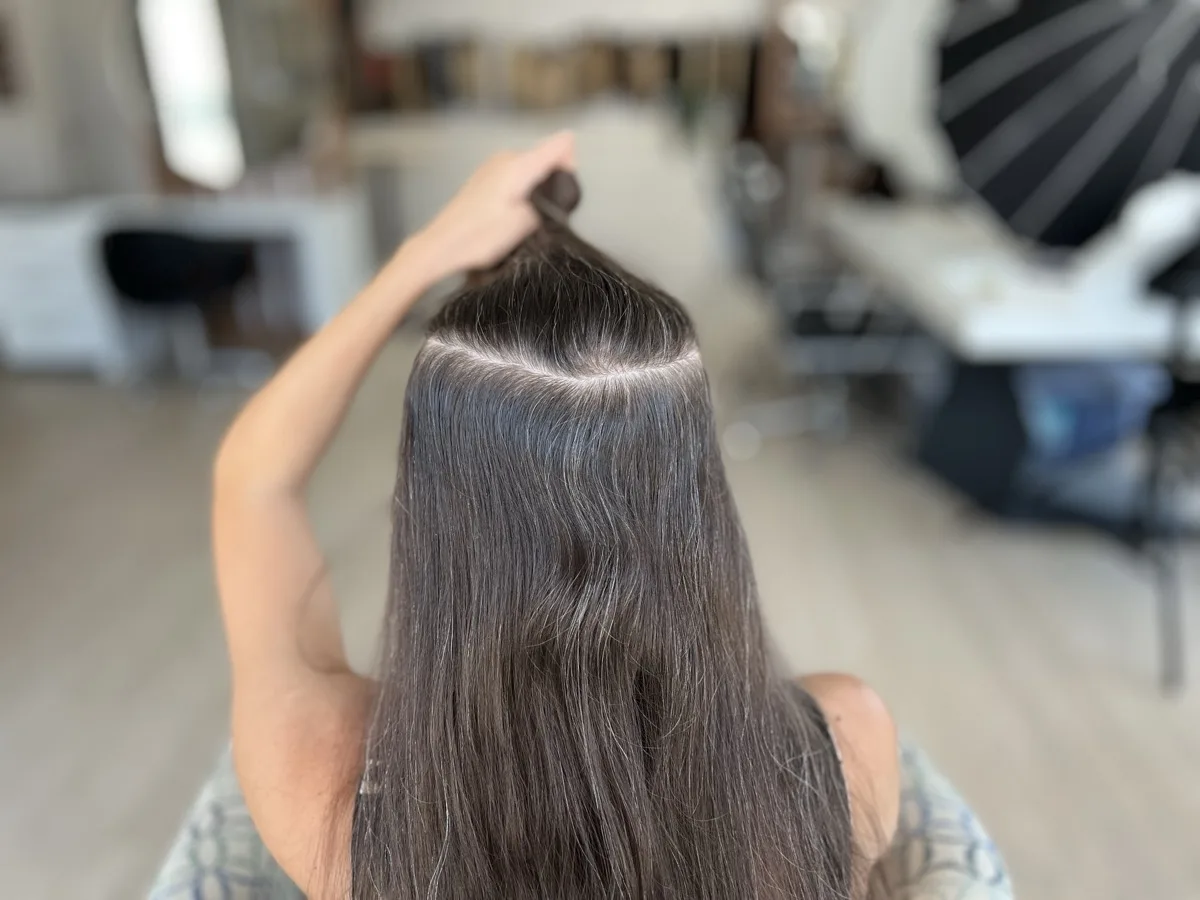
When professionals refer to a classic weft, they usually mean Machine Weft: hair secured along the upper edge with machine stitching, producing a durable, consistent carrier line. Machine Weft has served salons reliably for years and remains highly effective for substantial density plans, longer lengths and broad area coverage.
The principal difference between Butterfly Weft and Machine Weft is not the attachment mechanism but the upper construction. Machine Weft is applied with its top seam in its prepared form; Butterfly Weft's upper section is folded from 2 cm to approximately 1 cm before or during fitting. Both products belong to the same family and can be used with the same application techniques — sewn, beaded or hybrid.
Labelling Machine Weft as an outdated system would be misleading. On dense hair with generous coverage and a significant volume target, a traditional Machine Weft can still be an excellent specification. Butterfly Weft offers additional planning flexibility in certain hair types and layered row plans; it does not claim automatic superiority in every scenario.
The correct question is practical: which weft construction suits this client's hair structure, target grams, placement plan and maintenance routine? Sometimes Machine Weft, sometimes Butterfly Weft, and sometimes a non-weft family is the more sensible choice.
Is Butterfly Weft the same as a beaded weft row?
No — and this distinction is central to understanding Butterfly Weft correctly. Butterfly Weft is a product: the construction format of the hair panel you purchase. A beaded weft row is an application architecture: the professional technique that defines how that panel is secured to natural hair.
In a beaded-row installation, small beads are placed along a support track created from the client's natural hair; the weft panel is then sewn or otherwise secured to those beads. The same beaded architecture can be used with a Machine Weft panel or a Butterfly Weft panel. Beaded row does not automatically mean Butterfly Weft.
The reverse is equally true: a Butterfly Weft panel can be fitted using a sewn support track without beads. Product and application technique are two independent decisions. When the market says butterfly weft, it often means a Butterfly Weft product fitted with a beaded row — but that pairing is common practice, not a requirement.
The general framework for weft application approaches is on weft hair extensions and hair extension methods. When planning an order, decide first which weft construction (Machine or Butterfly), then which application base (sewn, beaded or hybrid).
What is layered Butterfly Weft application?
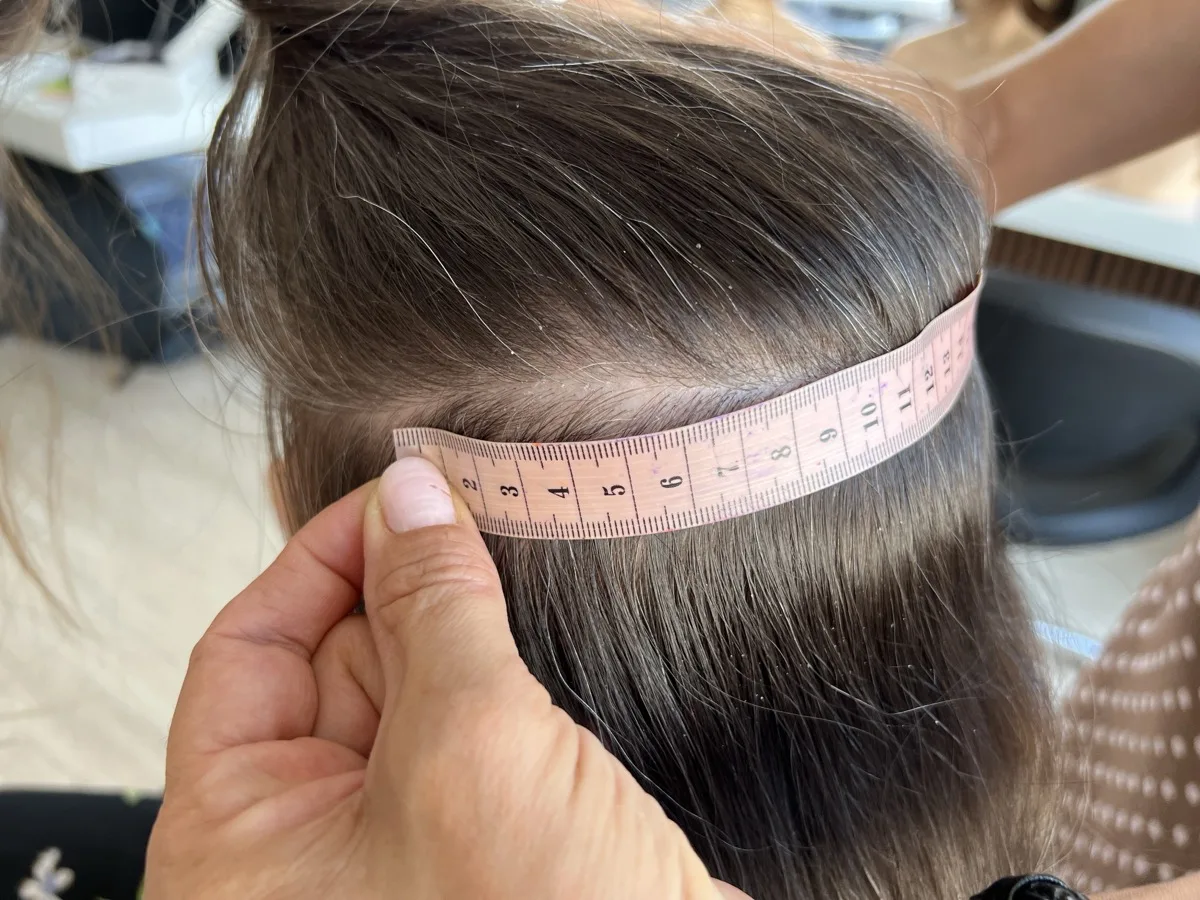
Layered Butterfly Weft application divides the total grams across several controlled rows rather than concentrating everything in one thick panel. Each row is planned at a different height: lower rows sit with adequate clearance from the nape, upper rows remain below the level at which natural hair can still cover the construction.
Professional row planning begins by mapping usable zones — how far down from the crown a track can safely be placed, whether side areas can carry a support line, and how much coverage exists over the crown and above the ears. Total grams are then distributed across those zones in sensible proportions.
Butterfly Weft's compact upper profile can help manage the cumulative thickness when several rows are stacked. Three balanced rows may produce a softer transition than one heavy row — but that outcome depends on the practitioner's row-planning skill, not on the product name alone.
In layered work each row has its own support track. Vertical spacing between rows should relate to the natural hair's ability to cover the panel. Rows placed too close together increase visibility risk; rows spaced too widely can disrupt density distribution. Updo habits should be discussed before rows are positioned.
One thick row or several balanced layers?
A single thick row concentrates the total grams in one weft panel. It can mean quicker installation, fewer support tracks and a pronounced density increase — but the row head may read more visibly, particularly on finer fibre or lower coverage hair.
Several balanced layers split the same total grams across two or three rows. Each row carries less weight individually; cumulative thickness is distributed. Butterfly Weft's foldable profile can help keep each layer's row head slimmer in this approach.
There is no universal rule. Natural density, the target result, coverage capacity and the client's maintenance habits must be assessed together. One hundred and fifty grams in a single row may suit one head; two hundred grams across three layers may look more natural on another.
More rows are not automatically better. Every additional row creates a support area, a concealment requirement and a maintenance point. The plan should use the minimum number of well-positioned rows needed for the intended result.
Why Butterfly Weft can represent strong long-term value
Describing Butterfly Weft as economical does not mean positioning it as a budget product. It means evaluating total cost of ownership: a reusable professional hair investment maintained through controlled refit cycles rather than treating extensions as a single-use purchase.
The weft family's economic argument rests on reusability. Quality weft hair, maintained appropriately and refitted professionally, can serve across multiple application cycles. Consumables — thread, beads, adhesive components — are renewed at each refit; the hair itself may remain in service if its condition allows.
Butterfly Weft's compact profile may, in certain hair types, allow the target density to be reached with fewer rows — which can affect labour time. That is not true for every plan. Total cost combines hair grams, application labour, maintenance appointments and refit cycles.
Current pricing is managed on Hair Extension Prices in Fethiye rather than duplicated here. When comparing systems, calculate hair plus labour plus maintenance plus refit together — not the headline figure alone.
What does reusing weft hair actually mean?
Weft applications involve three cost layers: the hair (the weft panel itself); consumables (thread, beads and other elements replaced at each refit); and labour (application, maintenance, refit and removal). Reuse refers to preserving the hair layer — not avoiding professional labour or consumable replacement.
If the weft head remains intact and the hair has not suffered excessive shedding or chemical damage, the panel can be professionally refitted. Consumables are always renewed; the hair may continue in service when its condition supports that.
Language promising unlimited reuse or permanent hair sets ignores too many variables. Washing routine, heat exposure, brushing technique, chemical services, how the weft is removed and how carefully it is reinstalled all affect condition. Each set has its own practical lifespan.
Honest long-term value comes from investing in quality Double Drawn hair and maintaining it through professional refit cycles — not from marketing claims about infinite reuse.
Who is Butterfly Weft a strong choice for?
Butterfly Weft is particularly effective for clients seeking a noticeable increase in density and length, with enough natural hair to conceal and support planned rows, and who can follow a regular maintenance routine. The weft family's density efficiency — covering a broad area through relatively few rows — suits this profile well.
Clients who benefit from layered row planning may find Butterfly Weft's compact profile useful when several rows are stacked. Managing the cumulative row-head thickness can be easier when each layer folds to a slimmer profile.
Weft systems reward clients who maintain appointments, handle their hair with reasonable care and plan for refit costs. Butterfly Weft is not a fit-and-forget product; periodic professional attention is part of the system.
Clients looking for long-term value — spreading a quality hair investment across multiple refit cycles rather than replacing hair at every appointment — may find Double Drawn Butterfly Weft a sensible specification within the accessible premium segment.
When is Butterfly Weft not the right choice?
Butterfly Weft is not correct for every client. Very sparse zones, extremely short heavily layered hair, point-by-point density requirements or small regional corrections may be better served by individual strand systems that offer more placement freedom.
If natural density cannot support a weft carrier track — meaning there is insufficient hair to conceal the panel — strand-based families should be considered. Fine fibre diameter alone does not establish this; fine hair and sparse hair are different conditions.
Clients who cannot maintain regular appointments, who expose hair to aggressive chemical processing without professional guidance, or who wish to avoid planning refit costs may find weft systems unsuitable regardless of construction.
Alternative families include Nanofilament (ultra-fine strand, 0.3 g / 0.6 g), Micro (bonded strand), Keratin (bonded tip) and Tape-In (adhesive panel). Compare them on the systems comparison.
Butterfly Weft on fine hair
Butterfly Weft's more compact upper profile can be advantageous in certain application plans on fine hair. The folded approximately 1 cm profile may create less cumulative bulk than a traditional Machine Weft top seam — but that does not establish automatic suitability.
Fine fibre diameter and low density are not the same condition. Fine but dense hair may carry a weft well; sparse hair may not support a carrier track even when individual strands are fine. The decision rests on total density and coverage capacity, not fibre thickness alone.
On fine hair, layered application often produces a more natural result than one thick row. Dividing grams across several slimmer rows softens the weight line; Butterfly Weft can help manage each layer's profile in that scenario.
Strand-based alternatives and placement logic are discussed in the systems comparison and on Nanofilament hair extensions.
Butterfly Weft on short hair
The central challenge with short hair is not whether a weft can be attached but whether the row line and the transition between natural and added hair can be concealed. A weft forms a horizontal line; enough natural hair must fall over that line during normal movement.
Very short crown layers, exposed partings, short sides or insufficient perimeter coverage can limit placement. Short hair should be assessed zone by zone rather than through one minimum centimetre rule.
Butterfly Weft's compact profile may offer a theoretical advantage on short hair — a slimmer row head may require slightly less covering hair. In practice, feasibility is evaluated region by region; hybrid plans combining weft at the back and strand systems at the crown are sometimes appropriate.
Short-hair transformations often require higher total grams and a deliberate graduation cut plan. How extension ends step down to existing length should be designed before fitting begins.
Grams and Butterfly Weft
Grams are the most meaningful measure when purchasing weft hair. At SACH & VOGUE HAIR the core commercial reference unit is 100 grams — but 100 grams is not a universal prescription for a full head.
The same 100 grams behaves differently at different lengths. A useful specification combines total grams, length, natural hair density, target result, number and position of rows, and the Draw standard of the hair. Butterfly Weft does not alter gram logic: 100 grams of Butterfly Weft carries the same hair mass as 100 grams of Machine Weft.
The foldable upper construction changes row-head geometry, not the weight of hair in the panel. Planning should begin with where the hair can support weight and how grams should be distributed — not with a predetermined total copied from another client.
How grams interact with length and density is unpacked on the hair extensions page and in context across weft hair extensions.
How many rows or layers are typically planned?
Row count is not fixed, and more rows do not automatically create a better result. Each row carries a portion of grams, requires a support area and must remain concealed. Professional planning identifies the minimum number of well-positioned rows needed for the target outcome.
Typical Butterfly Weft plans may range from one to four rows depending on the brief. Light fullness or moderate lengthening may need one or two rows; a pronounced density change or long-hair transformation may require three or four.
The lowest row is usually planned with adequate clearance from the nape — often beginning a few centimetres above the hairline at the back. Upper rows sit below the level at which natural hair can cover the panel. Vertical spacing between rows adjusts to the individual head.
Layer count and row count are related but not identical. One row is one weft panel; a layer describes the height at which that row sits. A three-layer application usually means three separate rows at different elevations.
Double Drawn Butterfly Weft
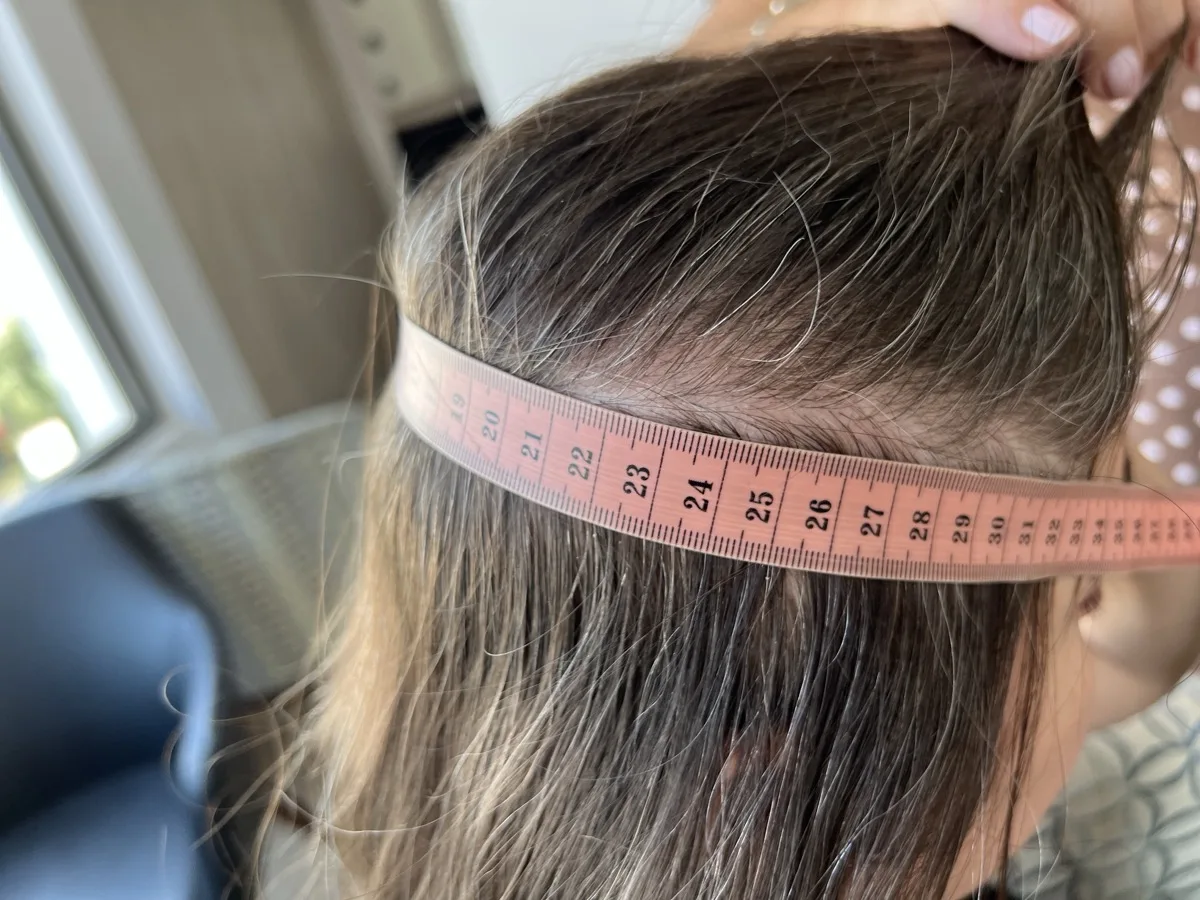
Double Drawn is the preferred SACH & VOGUE HAIR hair standard. In Double Drawn preparation a greater proportion of shorter fibres is removed so that more of the mass continues through the length — fuller ends and more consistent density along the panel.
That matters particularly in a weft because the product already creates a broad visual field of hair. A panel dense at the seam but noticeably thin through the final length can look uneven, especially at longer lengths. Double Drawn Butterfly Weft reduces that risk.
Double Drawn does not automatically make an attachment heavier: one hundred grams remains one hundred grams regardless of Draw standard. What changes is how the hair mass is distributed through the length — preserving end density rather than concentrating it at the seam.
The Draw standard is confirmed with each order specification. Read more on Double Drawn hair extensions.
Colour matching for Butterfly Weft
Colour accuracy is especially important with a weft because the added hair appears as a broader visual field than hundreds of dispersed individual strands. Professional weft matching often involves blends rather than a single code.
SACH & VOGUE HAIR can prepare multi-tone combinations including ombré, balayage and highlight families. Colour should be assessed in natural daylight whenever possible; photographs may not carry undertone and depth reliably.
On a Butterfly Weft panel, colour consistency should run evenly along the row. Our production line checks for homogeneous distribution across the full panel. Custom colour orders may include a sample approval step.
Colour matching and blending are covered on hair extension colour matching and how to blend hair extensions.
Cutting and blending after fitting
Quality hair and a well-made weft do not automatically produce a natural-looking finish. After fitting, the natural hair and the added hair must read as one haircut.
Professional blending may involve softening weight lines, connecting the face frame, introducing appropriate graduation and adjusting extension ends to the intended finished shape. In layered Butterfly Weft work, each row's ends may be cut to different lengths to build a gradual transition.
The cut plan should be established before application where possible — particularly for short-hair transformations or significant length changes. Which point the added hair becomes visible and how ends step down should be designed in advance.
Blending logic is expanded on how to blend hair extensions.
Can you wear Butterfly Weft hair up?
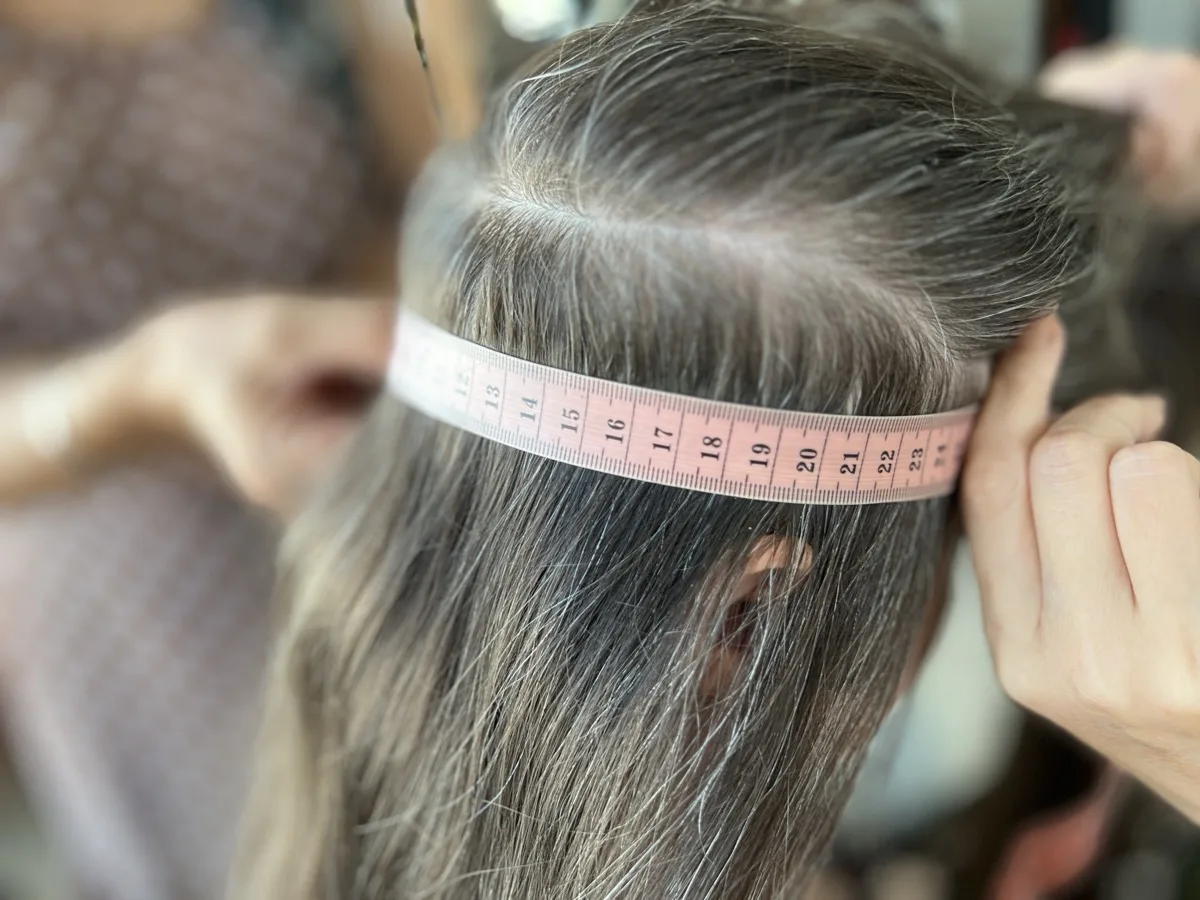
Yes — when rows are planned with the client's updo habits in mind. A professional should ask how the client typically gathers their hair — ponytail, bun, braid — and position rows accordingly.
When hair is pulled up, row edges should not become visible. Lower rows are planned with clearance from the nape; upper rows remain below the height at which the client normally gathers hair. The same logic applies at the sides.
Clients who regularly wear very high buns or tight ponytails need row plans adjusted for that routine. Visible panel edges during updos usually indicate planning oversight rather than product limitation.
Butterfly Weft's compact profile may make updos more comfortable by reducing cumulative bulk — but that remains dependent on planning quality.
Daily maintenance for Butterfly Weft
Weft maintenance centres on the support row, the upper weft construction and the free lengths of hair. After washing, the root and row area should be dried thoroughly; prolonged trapped moisture around the installation should be avoided.
When brushing, support the lengths rather than repeatedly pulling against the top of the weft. A wide-tooth comb or weft-friendly brush is preferable. Direct high heat on the connection zone should be avoided.
After swimming, sauna or intensive exercise, drying the connection area promptly matters. Weft systems involve fewer attachment points than strand systems but a broader panel area — a different maintenance discipline, not necessarily a lighter one.
General maintenance guidance is on hair extension maintenance.
Professional refit and repositioning
As natural hair grows, the application line moves away from the scalp. At a certain point the panel is removed and professionally repositioned closer to the current root area — this is refit, and it is a normal part of the weft maintenance cycle.
During refit the weft panel is removed professionally; hair condition is assessed. If the hair and weft head remain in good condition, the panel is cleaned, lightly maintained if needed and reinstalled on a fresh support track. Consumables are always replaced.
Refit intervals are not fixed to a calendar. Growth rate, maintenance quality and daily habits all influence timing. A professional evaluates refit need at regular check appointments.
Refit cost is a significant component of total cost of ownership. A well-planned refit cycle can be considerably more economical than purchasing new hair at every appointment — the foundation of the weft family's long-term value argument.
How many times can Butterfly Weft hair be reused?
There is no responsible universal number. Hair quality, maintenance discipline, chemical history, removal technique at each refit and daily styling habits all influence how long a panel remains suitable for professional reinstallation.
Quality Double Drawn Butterfly Weft, maintained appropriately and refitted professionally, can serve across multiple application cycles when the weft head remains intact and shedding has not become excessive.
Claims of unlimited reuse are not honest. Every hair set has a practical service life related directly to care quality. Long-term value comes from investing in quality hair, not from infinity marketing.
Professional removal technique affects reuse potential — see hair extension removal.
Butterfly Weft and value for performance
Value-for-performance assessment should consider total cost of ownership, not the opening price alone. Butterfly Weft sits in the accessible premium segment: a quality hair investment maintained through controlled refit cycles can deliver meaningful long-term value.
The weft family's performance advantage includes covering a broad area through relatively few rows and the potential to reuse hair across refit cycles. Strand systems such as Nanofilament or Micro require more attachment points per refit, which affects labour time.
Any price difference between Butterfly Weft and Machine Weft reflects construction format when hair quality and grams are equal — not an automatic verdict on which performs better. The better value depends on the application plan.
Comparative language positioning Turkey or any supplier as the cheapest option is avoided here. SACH & VOGUE HAIR manufactures to consistent quality standards and offers professional consultation; pricing is managed centrally.
Current figures are on Hair Extension Prices in Fethiye.
Genius Weft, Invisible Weft and other trade names
The international weft market uses many commercial names — Genius Weft, Invisible Weft, Hand-Tied Weft, Flat Weft, Seamless Weft and Butterfly Weft among them. These names are not universally standardised; two manufacturers can use similar labels for different constructions.
SACH & VOGUE HAIR defines Butterfly Weft according to our own production specification: 2 cm upper section, foldable to approximately 1 cm. A salon purchasing wefts should look beyond marketing names and ask how the upper edge is actually built.
Hand-Tied Weft is frequently grouped with these names in retail listings. SACH & VOGUE does not manufacture Hand-Tied Weft and does not claim it. Our weft portfolio comprises Machine Weft and Butterfly Weft.
When comparing suppliers, request construction details, gram specifications, Draw standard and sample panels rather than relying on trade vocabulary alone.
Butterfly Weft is the product; sew-in is the technique
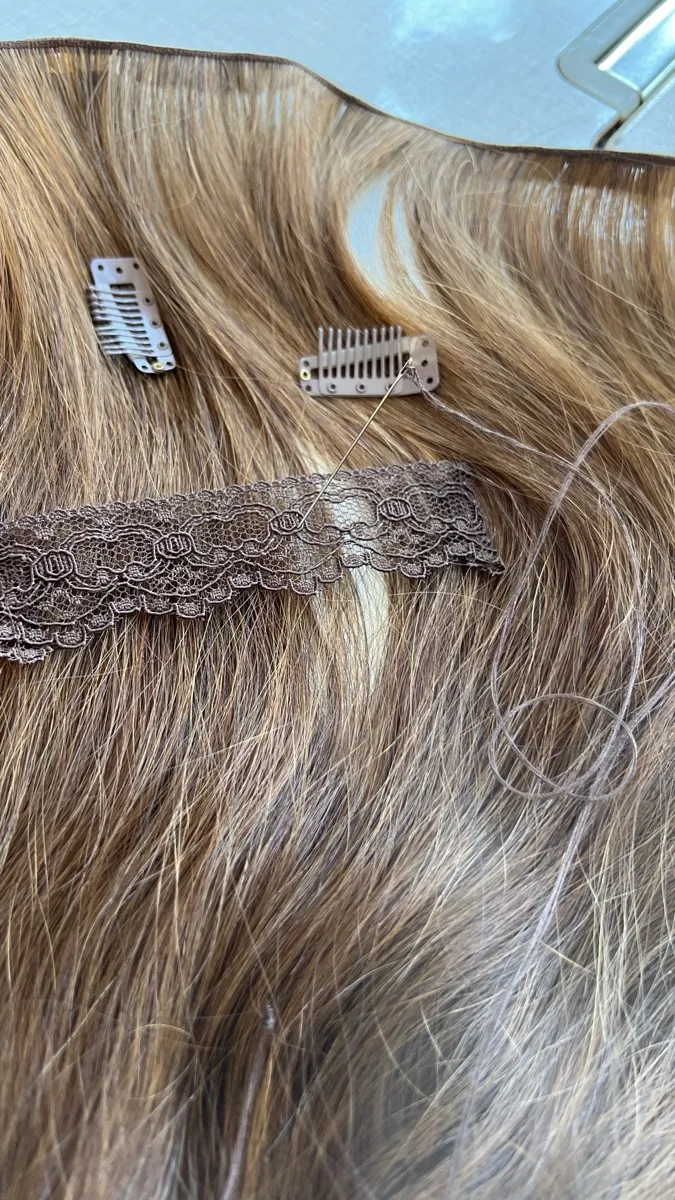
One of the most persistent simplifications online is that a weft is sewn onto a braid. That describes one traditional application method, not the definition of a weft or of Butterfly Weft specifically.
Traditional sew-in techniques may use a braided track. Modern salon approaches can also create support rows with beads and other professionally prepared structures before the weft is secured. The same Butterfly Weft panel can perform very differently depending on the row beneath it.
Application planning must consider where a row can safely be positioned, how much hair the natural section can support, how many grams will sit on each row, and whether the row will remain concealed when the hair moves.
Professional weft application at our Fethiye centre is described on sew-in hair extensions in Fethiye. The parent guide on weft hair extensions covers Machine Weft and Butterfly Weft together.
Professional removal and hair condition
How a weft is removed directly affects whether the hair can be refitted. Aggressive removal can damage the weft head and shorten the panel's useful life; careful professional removal preserves reuse potential.
Removal is not simply cutting the weft out. The support track must be dismantled methodically — whether sewn or beaded — and the natural hair assessed before any refit is planned.
Clients planning reuse should discuss removal technique with their practitioner before the first installation. The refit cycle begins with how the previous application was taken down.
Removal procedure and aftercare are covered on hair extension removal.
SACH & VOGUE HAIR Butterfly Weft manufacturing
SACH & VOGUE HAIR is both a professional hair extension manufacturer and an application specialist. We manufacture Butterfly Weft according to our own product construction and hair specifications from the same production line as Machine Weft.
A professional order is defined by length, grams, colour, texture, Draw specification and weft construction. Wholesale production is available for professional salons; custom ombré, balayage and highlight blends can be prepared to order.
Quality criteria include top-line consistency, stitch integrity, even hair distribution along the row and controlled shedding. For Butterfly Weft, foldable upper construction consistency is additionally verified.
Read more about our production standards on hair extension manufacturer in Turkey.
Butterfly Weft for professional salons
For professional salons, Butterfly Weft adds a compact construction option alongside Machine Weft within the weft family. Offering both allows more flexible responses to different hair structures and row plans.
Salon supply orders specify grams, colour, length and Draw standard. Wholesale production, regular supply planning and colour consultation are available as part of professional partnership.
Product knowledge and application skill are separate competencies. Salon teams need both — understanding foldable construction and executing layered row placement are distinct capabilities.
Training in weft application, row planning and layered placement is available through the Hair Extension Training Academy. Salons benefit from proficiency in both beaded-row and sewn-track techniques to match the client's hair structure.
Professional Butterfly Weft application in Fethiye
At the SACH & VOGUE HAIR centre in Fethiye, a Butterfly Weft application begins with consultation rather than a predetermined row count. We assess natural hair density, existing length, colour history, target length, target grams, Machine Weft versus Butterfly Weft, available row positions, and the cutting and blending required after fitting.
The objective is not to attach the largest possible quantity of hair. It is to distribute an appropriate amount across areas that can support and conceal it while producing the intended finished result.
Daylight photographs — front, back and sides — are valuable for colour matching and gram planning. An initial assessment can begin via WhatsApp; the definitive plan is settled in a face-to-face consultation.
Local application flow and current pricing are on sew-in hair extensions in Fethiye and hair extensions in Fethiye.
Comparison
The systems side by side
| Butterfly Weft | Machine Weft | Nanofilament | Micro | Tape-In | Keratin | |
|---|---|---|---|---|---|---|
| Placement type | Row / track | Row / track | Point | Point | Panel | Point |
| Commercial unit | Grams | Grams | Strand / gram | Strand / gram | Pack / piece | Strand |
| Product family | Weft | Weft | Bonded strand | Bonded strand | Adhesive panel | Bonded strand |
| Density efficiency | High (broad area / few rows) | High (broad area / few rows) | Moderate (point distribution) | Moderate (point distribution) | Moderate (panel area) | Moderate (point distribution) |
| Coverage requirement | Moderate–high | High | Low–moderate | Moderate | Moderate | Moderate |
| Hair reuse | Yes (with appropriate care) | Yes (with appropriate care) | Yes (with appropriate care) | Yes (with appropriate care) | Yes; tape strip no | Yes (with appropriate care) |
| Maintenance intensity | Moderate (refit cycle) | Moderate (refit cycle) | High (many attachment points) | High (many attachment points) | Low–moderate (panel renewal) | Moderate (refit cycle) |
A comparison gives direction; the final choice is settled with grams and colour in consultation.
Frequently asked
Common questions
What is Butterfly Weft?
Butterfly Weft is a SACH & VOGUE HAIR weft construction. Its 2 cm upper section can be folded into an approximately 1 cm application profile while the hair remains organised as a continuous weft panel.
Is Butterfly Weft a completely different extension method?
No. It remains part of the weft family. Butterfly describes the product construction rather than a new attachment mechanism such as keratin, tape or nano.
What is the difference between Machine Weft and Butterfly Weft?
Both are continuous wefts. Machine Weft uses a traditional machine-stitched top seam applied in its prepared form. Butterfly Weft uses our foldable upper construction to create a more compact application profile.
Is Butterfly Weft the same as a beaded weft row?
No. Butterfly Weft is a product construction; a beaded row is an application technique. The same Butterfly Weft panel can be fitted with a beaded row or a sewn support track.
What is layered Butterfly Weft application?
Total grams are divided across several controlled rows at different heights rather than concentrated in one thick panel. Lower rows sit with nape clearance; upper rows remain below natural coverage level.
How is Butterfly Weft sold?
Weft hair is most meaningfully sold by weight. The core SACH & VOGUE commercial reference is 100 grams, with the total selected according to the application plan.
Is Butterfly Weft Double Drawn?
Double Drawn is the preferred SACH & VOGUE hair standard. The exact specification is confirmed with each individual order.
Is 100 grams of Butterfly Weft enough?
It may suffice for some fullness applications; larger length or density changes may require more. The number should be decided after natural hair and the target result are assessed — not from a universal figure.
Can Butterfly Weft be used on fine hair?
It can be suitable when sufficient density and support are present, but fine hair alone does not establish suitability. Total grams and row construction must be assessed together.
Can Butterfly Weft be fitted to short hair?
Potentially, where enough natural hair exists to conceal and blend the row. Short crown or perimeter areas may remain unsuitable even when the back can carry a weft.
Can you wear Butterfly Weft hair up?
Yes, when rows are planned according to the client's updo habits. Row placement should keep panel edges concealed during ponytails, buns and braids.
Can Butterfly Weft hair be reused?
A well-maintained weft may be reinstalled if both the hair and the top construction remain in appropriate condition. We do not publish a universal reuse-cycle guarantee.
How many times can Butterfly Weft be reused?
There is no responsible fixed number for every client. Hair quality, maintenance discipline and removal technique at each refit all influence practical service life.
Why can Butterfly Weft represent good long-term value?
Total cost of ownership matters more than the opening price. Reusable quality hair, maintained through professional refit cycles, can spread investment across multiple appointments.
How should Butterfly Weft be maintained?
Keep the support row and panel head in good condition; dry the connection area thoroughly after washing. Periodic professional refit is part of the normal maintenance cycle.
Does SACH & VOGUE manufacture Butterfly Weft?
Yes. SACH & VOGUE HAIR manufactures both Machine Weft and Butterfly Weft. Hand-Tied Weft is not part of our production portfolio.
Is Butterfly Weft the same as Genius Weft?
Not necessarily. Commercial weft names are not standardised internationally. SACH & VOGUE Butterfly Weft refers specifically to our own foldable construction specification.
Can I have Butterfly Weft applied in Fethiye?
Yes. Professional Butterfly Weft consultation and application are available at the SACH & VOGUE HAIR centre in Fethiye after an initial assessment of hair, grams and colour.
How do I order Butterfly Weft hair?
Define colour, length, grams, texture and Draw standard. Daylight photographs sent via WhatsApp can support colour consultation; the final specification is confirmed in consultation.
There is no weft construction that is automatically correct for every head of hair. Send us clear daylight photographs of your natural hair, current length and the result you want to achieve. SACH & VOGUE HAIR manufactures Butterfly Weft, applies it professionally in Fethiye, and evaluates which weft construction — Machine or Butterfly — makes sense for your hair from production and application knowledge together. WhatsApp consultation is the practical starting point.
Method, colour, length and grams are settled by consultation before anything is quoted.