Careers
Careers in Hair Extension Manufacturing & Hairpiece Production
SACH & VOGUE HAIR is a manufacturer-led hair company in Fethiye, Türkiye. We are always interested in meeting experienced people whose craft aligns with our production: hair extension manufacturing, keratin tip preparation, tape-in production, bleaching and colouring, colour blending and matching, weft sewing, wig production and hand-tied topper work. Current openings change, but experienced applications in these areas are welcome at any time. The qualification that matters most is not only having done the work before — it is wanting to make the next one better than the last.
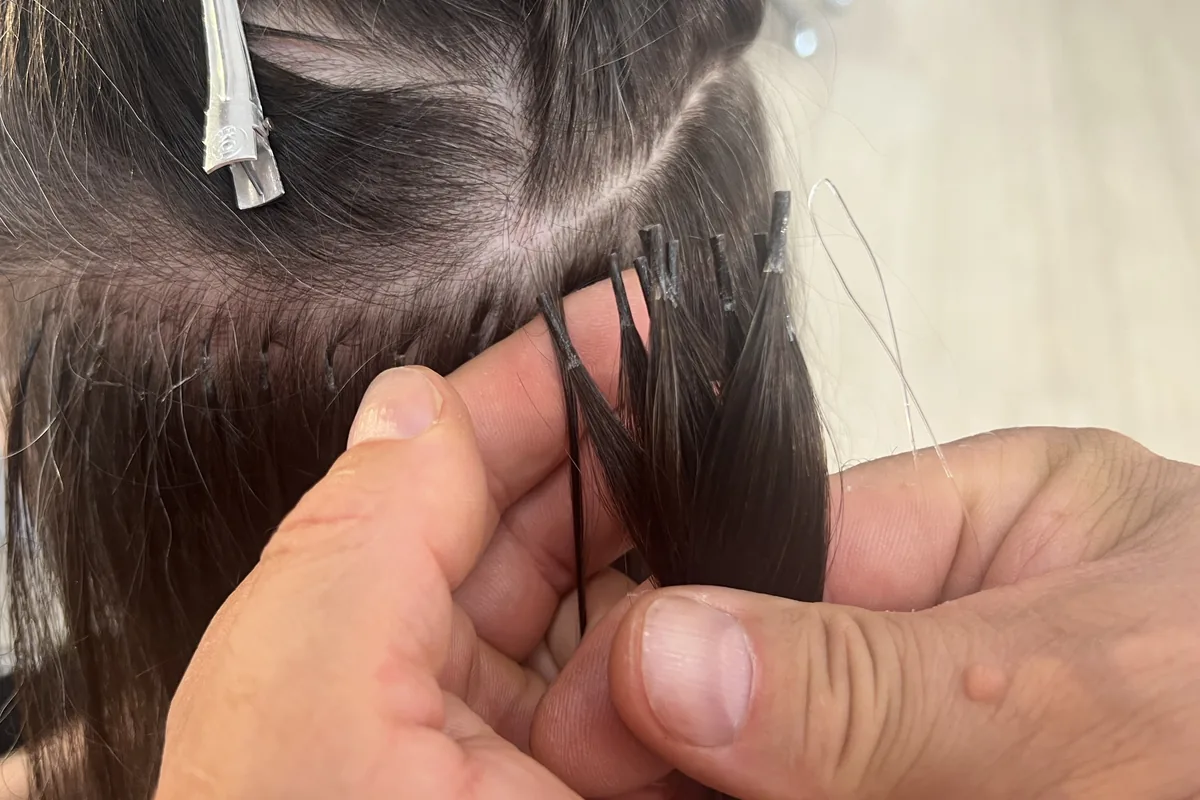
This page is not a job advert. It describes the kind of work we do and the kind of experience we are always glad to hear about, so that someone who has spent years with their hands in human hair can tell quickly whether this is the right workshop for them.
Specific openings come and go. The areas below are constant, and an application in any of them is welcome whether or not a position is currently posted.
Working with SACH & VOGUE HAIR
We manufacture human hair extension products in Fethiye, on the south-west coast of Türkiye, and we also work with extension systems professionally in the same town. Raw hair arrives here and leaves as a finished product: sorted, drawn, coloured or blended, prepared into an attachment system, weighed and packed. How that work is organised is described on our manufacturer page.
The workshop is not a production line in the industrial sense. Batches are small enough that the person who draws a bundle often sees it again at colour, and again before it is packed. That has consequences for the work: there is less anonymity in it, more judgement, and a clearer connection between a decision made at one bench and how the product behaves three steps later.
It also means individual skill is visible. In a large automated operation, a careful worker and a hurried one produce similar output because the machine sets the pace. Here they do not, and the difference shows in the finished goods.
The kind of people we want to meet
The defining qualification is not only "I have done this before." It is also "I want to make the next one better."
Human hair is an inconsistent material. It does not behave identically from lot to lot, it responds differently to the same process on different days, and it rewards people who notice small differences and adjust. The people who do well in this work tend to share a particular temperament rather than a particular CV.
They are patient, because most of the operations here reward a steady hand over a fast one. They care about consistency, because the two-hundredth unit in a batch matters as much as the first. They have an eye for colour, or an eye for finish, or both. They are curious about why something worked, not only that it did. And they are comfortable saying that an approach did not work, which is more useful to a workshop than quiet persistence with a method that is failing.
We are also interested in people who bring ideas. Someone who has spent ten years preparing tips has usually formed opinions about how the process could be improved, and those opinions are worth hearing.
- Care about detail, and notice when something is slightly off
- Enjoy working with human hair as a material
- Patience with repetitive precision work
- Respect for consistency across a long batch
- An eye for colour, finish, or both
- Interest in the client’s final result, not only the step in front of you
- Willingness to learn, and to teach what you know
- Ideas about how a process could be improved
Hair extension manufacturing
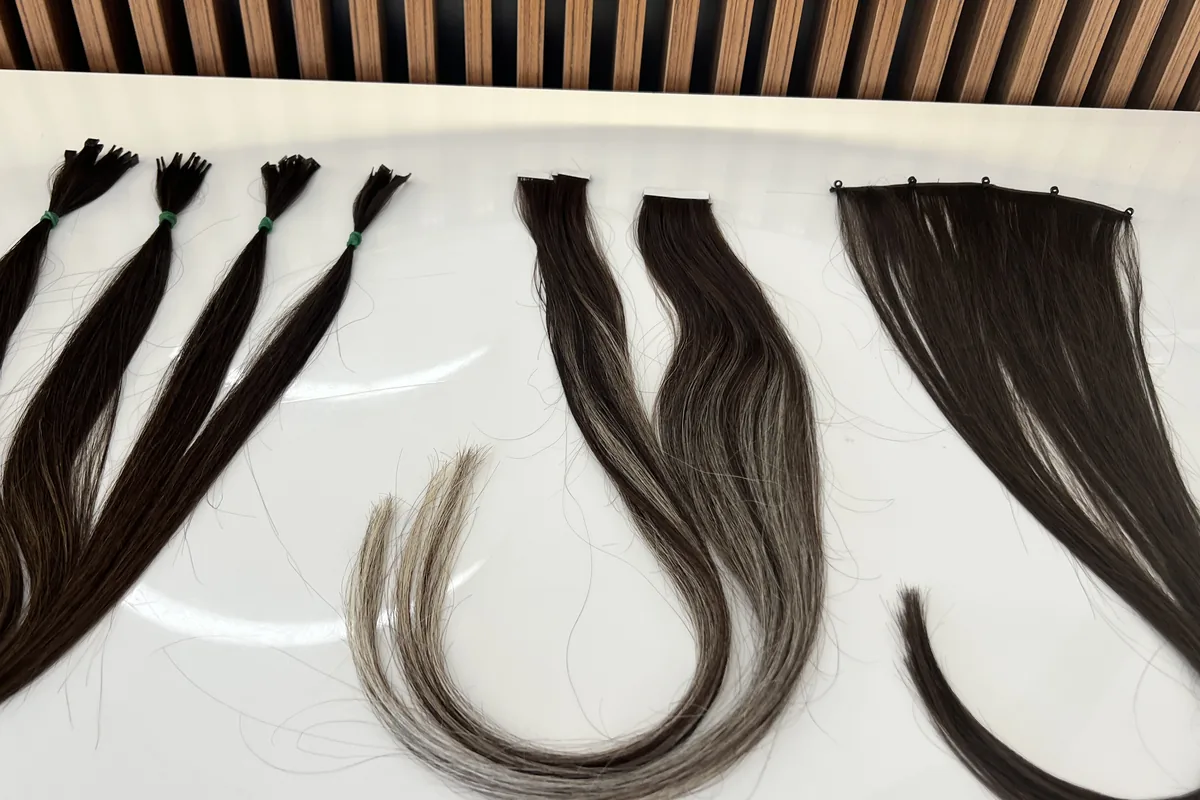
The foundation of everything here is preparation: sorting hair for length and root direction, and drawing it to the density standard an order calls for.
Direction work is the operation that is invisible when it is done well and impossible to correct when it is not. Hair has a cuticle that lies one way from root to tip. A bundle assembled with some fibres reversed feels acceptable in the hand and then tangles at the joint after a few weeks of wear. Someone experienced at this can read a bundle quickly and will check again as it moves on, because the cost of missing it is borne by a client months later.
Drawing is the repeated withdrawal of shorter fibres so that the bundle holds density towards the tip. Double Drawn is the standard we prefer. Each pass returns less than the one before, and knowing when to stop is a judgement against the target length and the lot in hand rather than a fixed count. Experience here is largely the experience of that judgement.
If you have worked in extension production — sorting, drawing, bundle preparation, batch consistency — that is directly relevant experience, whatever your previous employer called the role.
Tape-in production
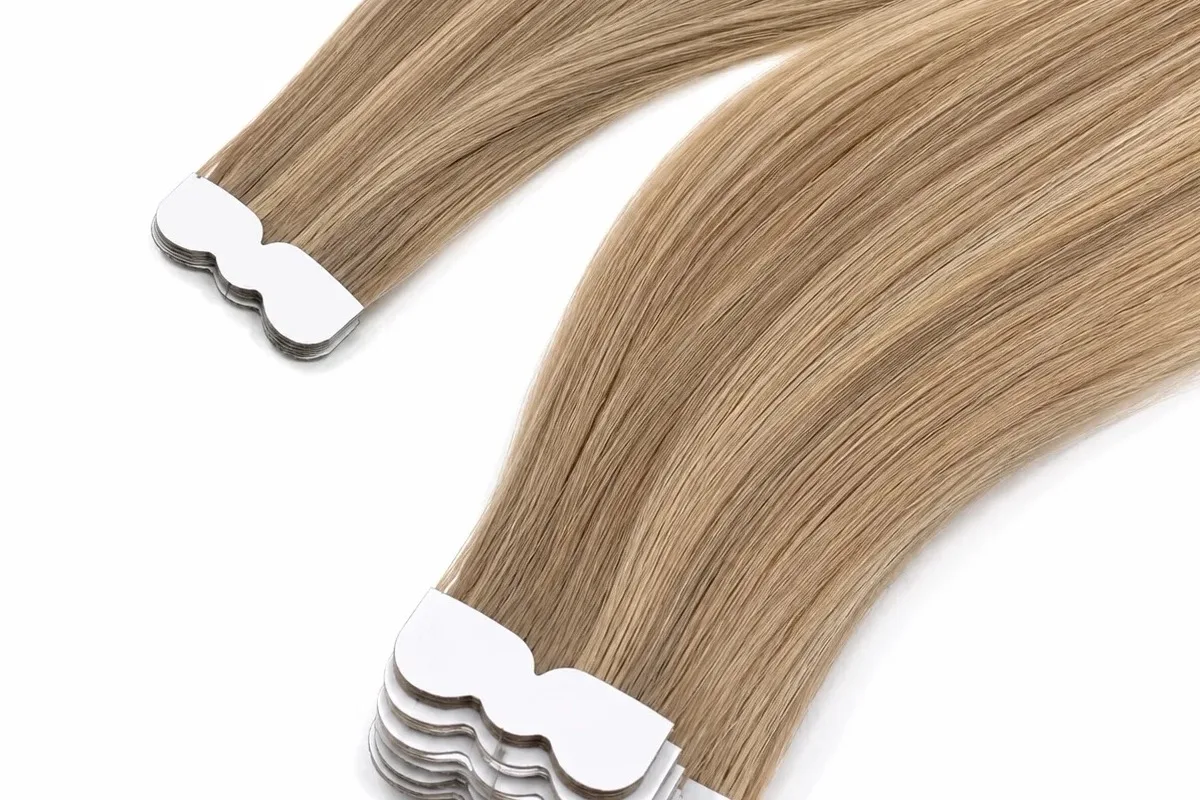
We prepare Butterfly Tape-In and Standard Tape-In systems. Tape work is panel-based rather than strand-based, so the discipline is different from tip work: the craft is in alignment, even density and clean finishing. The mechanism of the family is described on the Tape-In page.
Alignment is the skill that separates good tape production from adequate tape production. Hair sitting at slightly inconsistent angles across a panel looks acceptable laid flat and behaves unevenly once the panel is fitted and brushed. Density has to hold from edge to edge, because a panel that is fuller at one end reads as bulk in the wrong place on the head.
The work rewards someone who can maintain the same standard across a long run without the last panels drifting from the first. If you have prepared tape-in products in production, we would like to hear from you.
- Hair alignment across the panel
- Even density from edge to edge
- Clean, consistent finishing where hair meets adhesive
- Batch consistency across a full run
- Checking your own work as you go rather than at the end
Keratin tip preparation
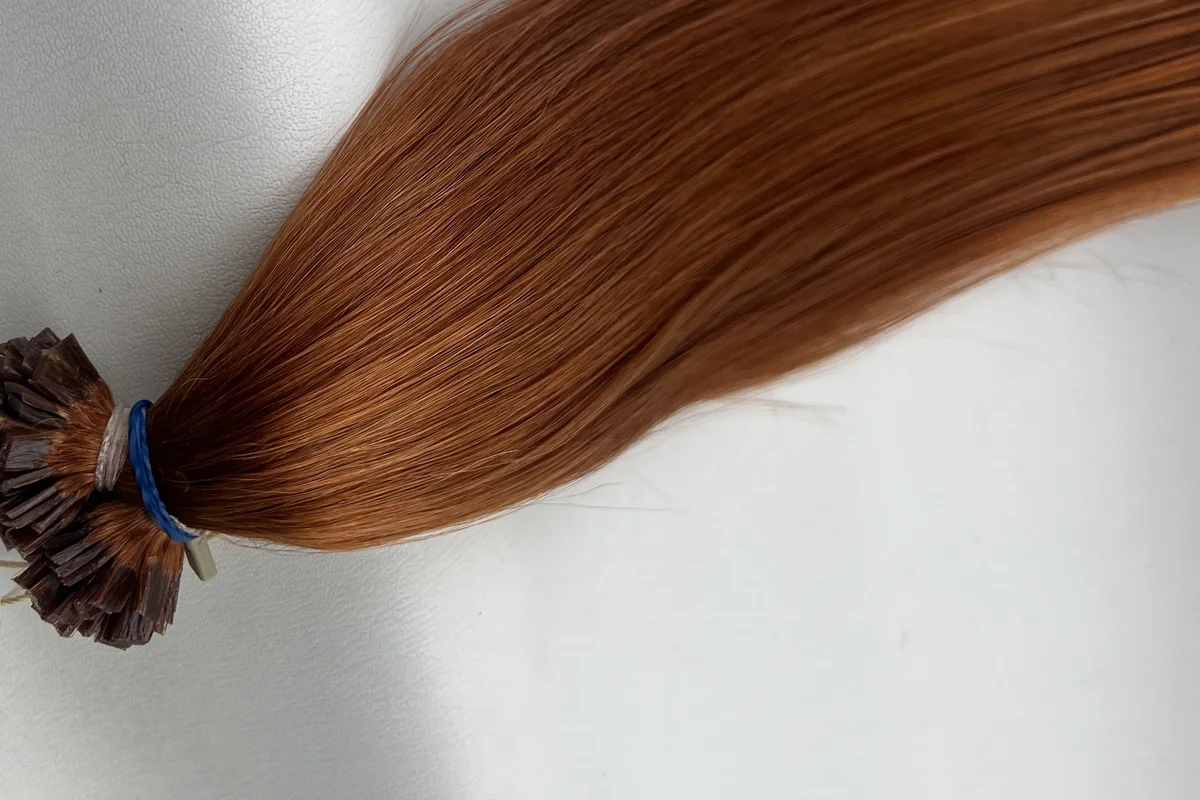
Keratin bonded preparation is central to what we make. Our Micro system is prepared with Italian keratin, and both it and Nanofilament are strand systems, meaning the hair is divided into individually planned units and a tip is formed on each one. The unit count sets the labour rather than the total weight.
Tip preparation is a repetition skill of a specific kind. The tip has to form cleanly, hold consistently, and present the same way to the technician on the two-hundredth unit as on the first. Someone who has done this at volume knows that the difficulty is not making one good tip — it is making four hundred that are indistinguishable from one another.
Consistency of the amount of hair in each unit matters as much as the tip itself, because a strand system is only as even as its units. Experience preparing individual bonded strand units, in any keratin system, is directly relevant here.
- Clean and consistent tip formation
- Even hair quantity per unit across a batch
- Working at volume without the standard drifting
- Familiarity with keratin bonded systems, Italian keratin included
- Handling prepared units so tips are not damaged before packing
Hair bleaching, lightening and colouring
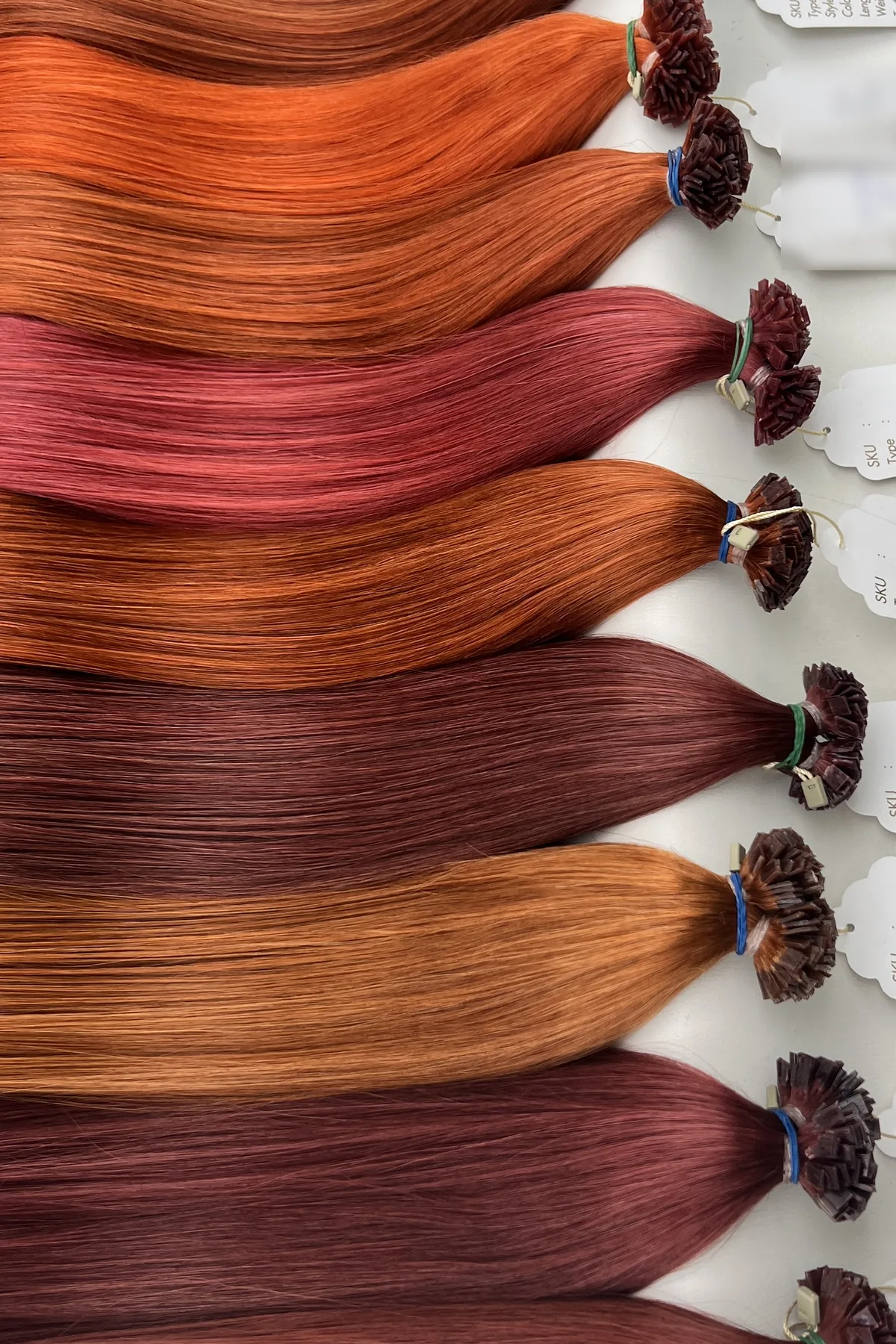
Raw hair reaches this trade on predominantly dark bases almost everywhere it is collected, so nearly every light shade in any catalogue is lifted hair rather than found hair. Colour work is therefore one of the most consequential parts of the workshop, and one of the most demanding.
Lifting human hair for extension production is not the same as lifting it on a head. The material is detached, it is processed in lots, and the result has to be consistent across a whole batch rather than acceptable on one client. The judgement that matters most is knowing where the limit sits for a given lot — the point past which lifting further costs more condition than the shade is worth. Fibre that fails was bought by weight and cannot be sold, so restraint has a direct value.
Beyond lifting, the work covers depositing tone, toning and correction, and multi-tone effects such as a shadowed root or a graduated end. Multi-tone work is a sequencing problem more than a mixing one: a transition that reads correctly flat on a bench can band once the hair is cut, fitted and moving under changing light.
We are looking for people who can protect fibre condition while achieving a target, and who can repeat a result across a batch. We do not publish formulas, and we would not expect an applicant to send us theirs.
- Lifting human hair while protecting condition
- Depositing colour, toning and correction
- Knowing where the limit sits for a given lot
- Consistency across a full batch rather than a single bundle
- Multi-tone work: shadowed roots, graduated ends, sequencing
Colour blending
This is one of the skills we value most, and one of the hardest to hire for, because it is genuinely a craft rather than a procedure.
Blending means taking two or more existing hair shades and physically combining them so that they read as one new colour. It is not colour-code arithmetic. The result is not the average of its components, and two blenders working from the same two shades in the same ratio can produce visibly different results.
Proportion is where it starts. Distribution decides at least as much: the same two shades evenly dispersed, lightly veiled through the surface, or concentrated towards the ends give three different colours. Undertone decides whether a blend stays clean or turns muddy. Depth and contrast decide whether it reads as dimension or as two separate colours sitting beside each other. And the final judgement is always about how the blend will read once it is installed and moving — not how it looks in a bundle on the table.
If you can look at a target and work out what components, in what proportion and what distribution, will get there — and then reproduce it — that is a skill we want to talk to you about.
- Proportion of components
- Distribution through the bundle, not only the ratio
- Undertone control
- Depth and contrast judgement
- Anticipating how a blend reads once installed and moving
- Reproducing a blend you or someone else made before
Colour matching
Matching is a related but distinct skill: assessing a target — a client’s hair, a physical sample, a shade-ring reference, or a previous production batch — and determining what will meet it.
The practical foundation is understanding that light changes perception. A match assessed under a workshop lamp can read differently in daylight, and a shade that agrees with a reference indoors can separate outdoors. Anyone experienced in this work has learned to check under more than one light before committing.
The other foundation is honesty about limits. We match against physical references rather than photographs, because an image carries relationships within its own frame and absolute colour not at all. Between production batches we expect a tolerance rather than an identity, since hair is a natural fibre processed in lots. Nobody in this work should be claiming mathematically perfect colour identity, and we do not.
Experience matching production batches against a retained reference is particularly relevant, because that is what makes a specification reproducible for a professional partner months later.
Hair sewing and weft work
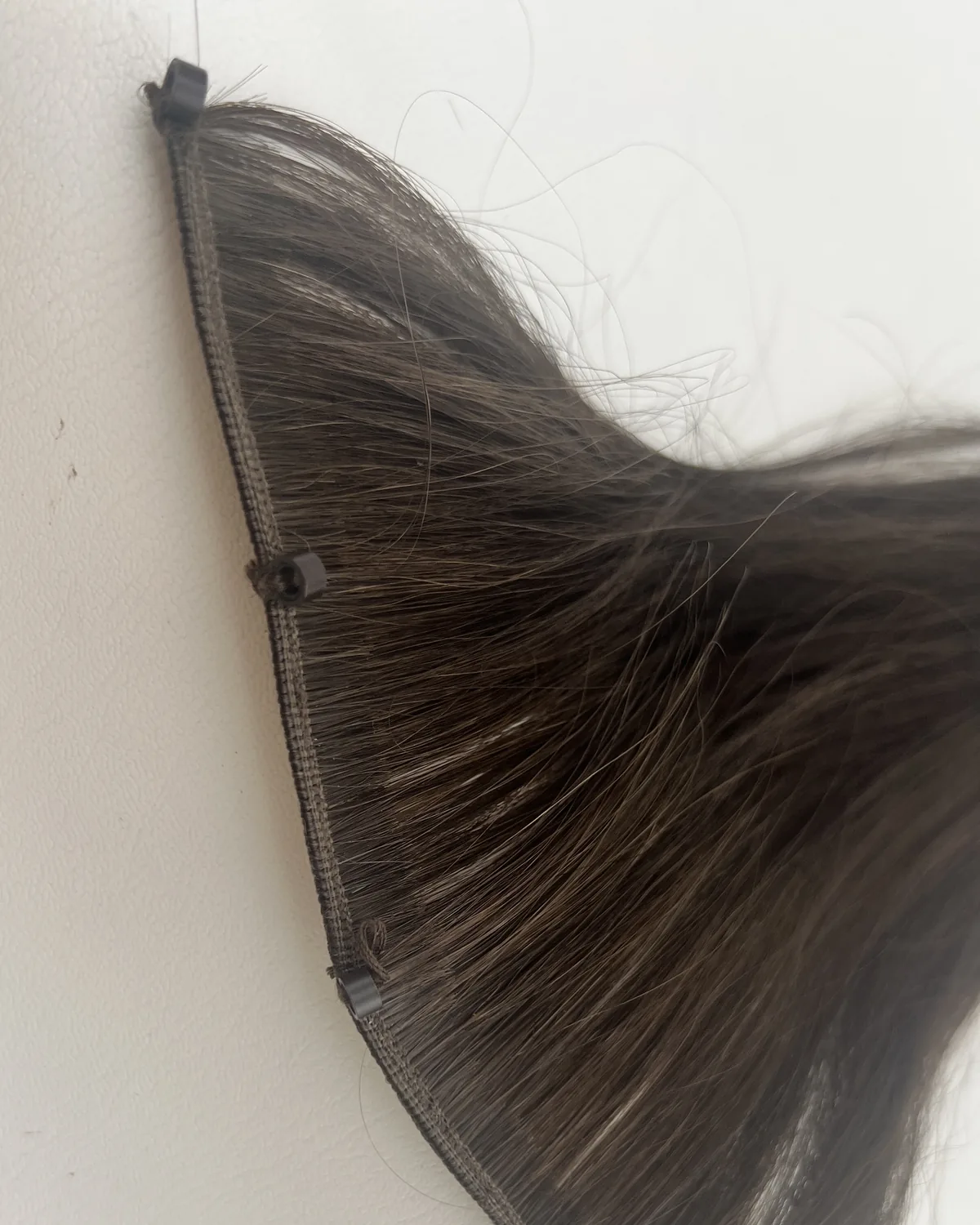
Weft work is sewing, and it is judged the way sewing is judged: by the edge and by the consistency along the length.
A weft has to hold even density from one end to the other, run straight, and finish cleanly enough that it can be cut without unravelling and sit flat against the head without a ridge. Density that drifts, or an edge that thickens where the work was rushed, produces a weft that fits unevenly and shows as bulk in the wrong place.
This is production sewing — machine-assisted weft preparation and finishing. Experience in hair sewing, weft preparation, edge work and finishing is directly relevant. If your sewing experience is in another material entirely but your standard of finish is high, we would still be interested, because the discipline transfers more readily than people expect.
- Consistent density along the full length
- Straight running and clean edge work
- Finishing that allows cutting without unravelling
- A weft that sits flat rather than ridged
- Maintaining the standard across a production run
Wig production
Wig work brings together several of the skills above and adds a structural one: the finished piece has to work as a whole object on a head, not only as well-made components.
The craft is in construction, hair placement, density planning across different areas of the piece, and a finish that moves naturally. Density is rarely uniform in a convincing piece, because real hair is not uniformly dense, and the judgement of where to add and where to hold back is what separates a wig that reads as hair from one that reads as a wig.
Experience in wig construction, sewing and finishing is welcome. So is the ability to look at a finished piece critically and say what would make the next one better.
Hand-tied toppers, hairpieces and wigs
This is a distinct discipline and we mean it specifically: hand-tied topper, hairpiece and wig craftsmanship — knotting hair by hand into a base. It is not the same as weft work, and someone skilled at one is not automatically skilled at the other.
It is among the slowest and most exacting work in this trade. Hair is placed by hand, and the decisions being made are about density, direction and parting — where hair should lie, how thickly, and at what angle, so that the piece behaves like hair growing rather than hair attached. Top-area and parting craftsmanship is where the skill is most visible, because that is where the eye goes first.
Density control across the base is a judgement rather than a measurement: too much and the piece looks solid, too little and it looks sparse under light. Direction determines whether hair falls into a natural shape or has to be forced.
If you have this skill, we would particularly like to hear from you. It is difficult to learn quickly and there are not many people who do it well.
- Hand knotting into a base (ventilation)
- Density control across different areas of the piece
- Direction planning so the hair falls naturally
- Parting and top-area craftsmanship
- Patience for exacting, slow, repetitive precision
Product development and an R&D mindset
A meaningful part of our work is developing products that do not exist yet, often because a professional partner arrived with a need rather than an order. That process is described on the manufacturer page, and it depends on people in the workshop who think that way.
What that looks like day to day is unglamorous. Someone notices that a tip forms more reliably when a step is done slightly differently. Someone proposes a change to how a panel is built. A prototype is made, put in front of a professional, used properly, and then revised — usually more than once, and sometimes abandoned.
We are especially interested in people who notice problems and propose improvements, who can make a prototype rather than only describe one, who can explain why something did or did not work, and who are comfortable repeating and refining rather than expecting the first version to be right.
That mindset is welcome from anyone in the workshop, whatever their main role. The person preparing tips all day usually knows more about tip preparation than anyone else in the building.
A quality control mindset
Quality here is not a final inspection station. It is a habit distributed across every bench, because most faults are cheap to fix at the step where they occur and expensive or impossible to fix later.
Direction is verified at sorting because a reversed bundle cannot be rescued afterwards. Colour is assessed against a retained physical reference rather than a description. Bundles are weighed against their stated weight before packing. Strand systems are checked for consistency across the run.
What we are describing is a disposition more than a procedure: checking your own work as you go, being willing to reject something you made yourself, and telling someone when a batch is not right rather than letting it move on and become a problem at a client’s chair.
Working in Fethiye
Our workshop is in Fethiye, Muğla, on the south-west coast of Türkiye — Taşyaka Mah., Ölüdeniz Caddesi (TSK), No: 45/1. It is a coastal town rather than an industrial centre, and the pace of the work reflects that. More about the area is on our Fethiye page.
This is the only location where our production happens, so the work described on this page is based here.
Experienced applications are always welcome
Current openings may change, but experienced applications in the areas above are welcome at any time. We would rather know who is out there than only meet people in the weeks when a position happens to be posted.
Job titles vary enormously across this industry, and the same skill is called different things in different workshops. If your previous title was not one of the terms used on this page but the work was the same, please still get in touch — describe what you actually made and how, and we will recognise it.
We are interested in people at different stages, too. Deep specialist experience in one discipline is valuable. So is broad experience across several, and so is a strong general craft background with a genuine wish to learn this material properly.
- Hair extension production specialists
- Hair colourists with extension-hair experience
- Wig makers
- Hairpiece and topper makers, particularly hand-tied
- Sewing and weft specialists
- Keratin tip specialists
- Tape-in production specialists
- Colour blending specialists
- Colour matching specialists
What to send us
Tell us what you know how to make. That is genuinely the most useful thing you can lead with — more useful than a formatted CV, because this is a craft and the work speaks for itself.
Photographs or short videos of work you have done are the clearest evidence there is. A batch of tips you prepared, a blend you mixed, a weft edge, a topper base, a colour you corrected — anything that shows your hand.
Please do not send identity documents, financial details or other sensitive personal information through a first message. Those belong to a later stage, in person.
- Your name and where you are based
- Your area or areas of experience
- The kind and length of hands-on experience you would like to share
- Photographs or videos of relevant work, where you have them
- The processes you are strongest in
- What kind of work you would like to develop further
Get in touch
Message us on WhatsApp using the button on this page, or through the details on our Fethiye page. Write in Turkish or English — both are read.
If your craft aligns with the work described here, we would like to hear from you whether or not a position is currently open.
Frequently asked
Common questions
Do I need to have worked in hair extension manufacturing specifically?
Not necessarily. Experience in adjacent craft — wig making, hairpiece work, salon colour at a high standard, precision sewing — often transfers well. What matters more is the temperament the work requires: patience, consistency across long batches, an eye for colour or finish, and genuine interest in the material. Tell us what you have made and how, and we will recognise relevant experience whatever it was called.
Is there a position open right now?
Current openings change. This page is deliberately permanent rather than a dated advert, because we would rather know who is out there than only hear from people during the weeks a specific role is posted. Experienced applications in any of the areas described here are welcome at any time.
What is the difference between the hand-tied work you describe and weft work?
They are separate disciplines. Weft work is sewing — preparing wefts with consistent density and a clean edge, which in our workshop is production sewing. The hand-tied work described here is topper, hairpiece and wig craftsmanship: knotting hair by hand into a base, with judgements about density, direction and parting. Someone highly skilled at one is not automatically skilled at the other, and we are interested in both.
Do I need to speak English?
No. Write to us in Turkish or English — both are read. The craft matters more than the language you describe it in.
What should I send with a first message?
Your name, where you are based, your area of experience, and — most usefully — photographs or short videos of work you have done. A batch of prepared tips, a blend, a weft edge, a topper base or a colour correction shows more than a CV can. Please do not send identity documents or financial details in a first message; those belong to a later stage.
Where is the work based?
Fethiye, Muğla, on the south-west coast of Türkiye. That is where our production happens, so the roles described here are based there.
Tell us what you know how to make — and send photographs of your work if you have them.
Method, colour, length and grams are settled by consultation before anything is quoted.